Cypress
Can you run an Airbnb or do rental arbitrage here? What the city requires: permits, taxes, safety rules and enforcement.
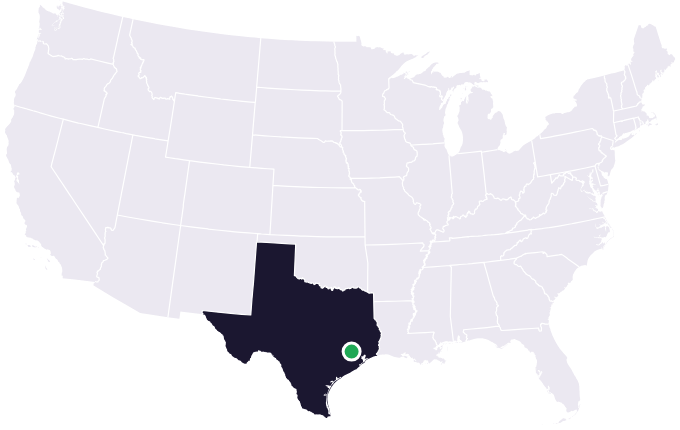
Green light: allowed with Houston registration inside city limits, so check your address
Houston requires a certificate of registration to run a short-term rental within the city limits, and the rule took effect Jan 1, 2026.[1] Each rental needs its own certificate, and an operator can apply with the owner's permission.[1] A violation is fined $100 to $500, and from Jan 1, 2027 the city will begin telling platforms to remove unregistered listings.[1, 2]
Our verdict, based on the sources at the end of this guide.
Houston requires a certificate of registration for any dwelling unit rented for less than 30 consecutive days, and the rule applies within the city limits.[1] The city says the annual fee is $275 per rental property.[3] You apply as the owner or operator, with the owner's permission or a current lease that allows short-term rentals on file, and you need human trafficking awareness training.[1, 7] The city says it will start notifying platforms to remove unregistered listings on Jan 1, 2027.[2]
Key requirements
Check your address
Houston's code makes it unlawful to operate, rent, lease or advertise a short-term rental within the city limits without a valid certificate of registration.[1] Houston's 7% hotel tax is levied within the corporate limits too.[5] For an address outside Houston, ask Harris County which rules apply.
Certificate and fee
The city says the annual registration fee is $275 per rental property.[3] The code sets the fee in the city fee schedule, so confirm the amount when you apply.[1] A certificate lasts one year, and you can apply to renew up to 90 calendar days before it expires.[1]
Per-unit rule
A separate certificate is required for each short-term rental, and it is valid only at the address on it.[1] It can't be transferred, and it is void if the registrant sells or conveys an ownership or leasehold interest.[1]
Who can register
The applicant is the owner, the operator or both, and an operator is the individual who operates or otherwise manages the rental.[1] You need proof of ownership or a declaration from the owner granting permission.[1] The city's page says that means a signed owner form or a current, valid lease that authorizes short-term rental use.[2, 7]
Application items
The application needs your contact details, the property address, an emergency contact, your platforms and listing links, and proof of ownership or owner permission.[2] It also needs an acknowledgment that you completed annual human trafficking training.[1] The owner must acknowledge that the rental doesn't violate deed restrictions, HOA rules or lease terms.[1]
Operational and safety standards
Listings
Every advertisement must include your certificate of registration number and the maximum permitted occupancy.[1] Platforms must also require the registration number in listings.[1]
Posting
Post a copy of the approved certificate at a conspicuous location inside the front entrance.[1]
Emergency contact
Your emergency contact must be available by phone at all times to respond to emergency conditions while guests are on the premises.[1] The contact must respond within one hour after being notified.[1]
Events
Don't advertise or promote a special event at a short-term rental, such as a banquet, wedding, reception, reunion, bachelor or bachelorette party or concert.[1]
Other city rules
The code also requires you to follow noise, nuisance, waste control and fire code rules and to pay hotel occupancy taxes.[1]
Tax obligations
State hotel tax
The Texas hotel occupancy tax is 6%.[4] It covers houses, condos and apartments, not just hotels.[4]
Houston hotel tax
Houston's code levies a tax equal to 7% of the consideration paid for a hotel room, within the corporate limits.[5] Its hotel definition covers tourist homes, rooming houses and other buildings where rooms are furnished for a consideration.[5] The city's page says registration needs proof of hotel occupancy tax remittance or registration on a remittance platform, and that listings only on Airbnb don't need that proof.[2]
Booking platforms
If your platform has a collection agreement with the state, it files and remits the state tax.[8] You still need to contact local jurisdictions about local taxes.[8] If you use a platform without an agreement, or your own website, you collect and remit the state tax yourself.[8]
Other local taxes
Counties and cities can add local hotel taxes, and the combined state, county, city and venue rates can't exceed 17%.[6] The Harris County Tax Office collects the county and Houston Sports Authority hotel taxes, and says a hotel's total combines state, city, county and Sports Authority taxes.[9] That page doesn't list a county rate, so ask the county.
30-day stays
Houston's registration covers rentals of less than 30 consecutive days.[1] For the state tax, the Comptroller says a hotel is liable if a guest who gave written notice as a permanent resident fails to stay 30 consecutive days.[8]
Enforcement
Fines
A violation is fined from $100 to $500, and each day it continues is a separate violation.[1] Revocation and other penalties come on top of the fine.[1]
Delisting
From Jan 1, 2027 the city will begin notifying platforms to remove listings that lack a certificate.[2] A platform must remove the listing within 10 business days after it gets the city's notice.[1]
Revocation
The director can revoke a certificate, without a refund, for reasons such as false application information, failing to report or pay hotel occupancy tax on time, or two or more nuisance removals by the city.[1] Two or more noise convictions within 12 months, or a conviction for certain serious crimes, are also grounds.[1]
After revocation
You can appeal within 20 calendar days.[1] A revoked registrant can't reapply for one year after the revocation.[1] If three or more certificates are revoked within 24 months, the director may revoke all remaining certificates held by that owner or operator.[1]
Complaints
The city runs an online complaint system and a map of registered rentals.[2]
Bottom line for arbitrage
Check the address first. Inside Houston, register every unit and keep the paperwork clean. Outside it, confirm county rules and deed restrictions before you sign.
Step 1 is the hard part. We find landlords who already said yes →
Sources
Tell us your market. Our team calls landlords and sends you properties already approved for Airbnb.
- Landlord-approved listings
- New deals weekly
- Search any US market
More guides in this state
Browse all city guides →Rules tell you where. We find the landlord who says yes.
STR Exchange members get landlord-approved rentals, new deals every week and a team that searches their market.
- Landlord-approved listings
- New deals weekly
- Many markets