Glendale
Can you run an Airbnb or do rental arbitrage here? What the city requires: permits, taxes, safety rules and enforcement.
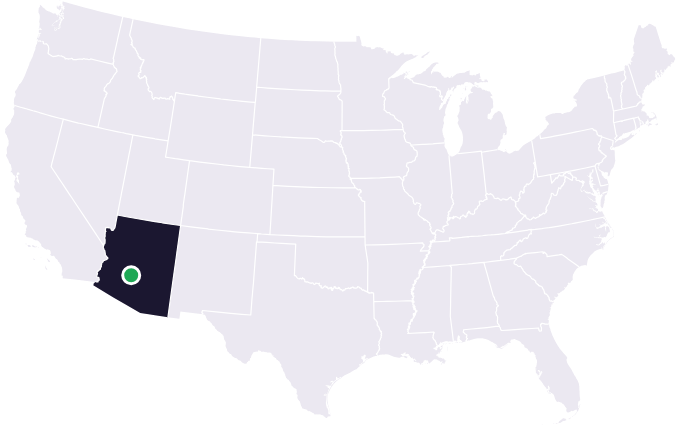
Green light: allowed with a city license and no cap
Arizona law bars Glendale from banning short-term rentals, or regulating them by use or occupancy.[1] The city asks every owner to register each rental[2, 3] under a code that sets no cap.[4] The code sets a $100 fee, though the city's FAQ says there's none right now.[3, 4]
Our verdict, based on the sources at the end of this guide.
Arizona law bars Glendale from banning short-term rentals or regulating them by use or occupancy,[1] and the city code sets no cap.[4] The owner gets a separate annual license for each rental, names an emergency contact and notifies neighbors before offering it.[4] The code sets a $100 fee, while the city's FAQ says there's none for now.[3, 4] You also need a state TPT license and a Maricopa County rental registration.[2] Lodging taxes add up to 15.17% by our count, though the city's page says 15.7%.[2, 5]
Key requirements
State TPT license
Get a TPT license from the Arizona Department of Revenue, using region code GE for Glendale.[2] The state says you can't offer a rental without one,[6] and the code asks for proof of it with your application.[4]
City license
The owner must get an annual short-term rental license from the city before using a property as a short-term rental, and each rental needs its own.[4] A license is valid for one year, can't be transferred to another place or person, and the application details are made publicly available.[4] The city's page and FAQ call it a registration.[2, 3]
Who applies
The application lists the owner's name, address and phone, plus the entity's legal name and statutory agent if an entity owns the property.[4] It also names any designee and an emergency contact with a 24-hour phone number.[4] The owner and each designee can't be a registered sex offender or have certain felony convictions.[4]
Fee
The code sets a non-refundable $100 fee with every application and renewal.[4] The city's FAQ says there's currently no fee, and its page says registration launched with no charge at first.[2, 3] The two disagree, so ask the city which applies.[3, 4]
County registration
Register each rental with the Maricopa County Assessor before anyone stays.[2] The city cites A.R.S. 33-1902 for this rule.[2]
ADU provision
State law has an owner-occupancy provision for properties with an accessory dwelling unit (ADU) whose certificate of occupancy was issued on or after Sept 14, 2024, and none for earlier certificates.[1] The Glendale page and code don't mention it, so ask the city if the property has an ADU.[2, 4]
Operational and safety standards
Emergency contact
Give the city the emergency contact's full name, address and 24-hour phone number.[4] The city page also wants contact details for the owner or owners who respond to complaints.[2] Tell the city about any change to your application details at least 10 days before it takes effect.[4]
Neighbor notice
Before you offer or rent the property, notify in writing each single-family home next to, directly across from and diagonally across the street from it, by certified mail with return receipt or by hand delivery.[4] The notice gives your city account number, the rental address and the emergency contact's name, address, email and 24-hour phone number.[4] Notify them again within five calendar days of any change, and give the city an attestation listing each property notified before you offer the rental.[4]
Insurance and ads
Carry at least $500,000 in liability insurance, or equal coverage through an online booking platform.[4] Show your TPT license number on every advertisement.[7]
Prohibited uses
A rental can't be used for retail, a pop-up store, a restaurant, banquet space, an event center or another non-residential use.[4] The code also bars housing sex offenders, structured sober living homes, selling liquor, controlled substances or pornography, and adult-oriented businesses.[4]
Nuisance parties
Under the city's Nuisance Parties and Unlawful Gatherings ordinance, owners are accountable for repeated unruly gatherings or parties.[2] It applies to every private residence, whether a long-term rental, a short-term rental or owner-occupied.[2]
What the code leaves out
The code lists no guest background check, safety equipment rule, inspection or zoning limit.[4]
Tax obligations
State and county tax
Short-term rentals of under 30 days are taxed as transient lodging, reported under business code 025 for the state and county.[7] The state's October 2026 rate table lists 7.27% for transient lodging in Maricopa County, which combines the 5.6% state rate and the county excise tax.[5]
City tax
The state says city tax on short-term rentals is reported under the hotels code, 044, plus code 144 where a city has an additional hotel tax.[7] The table lists 2.90% for Glendale hotels and 5.00% for the additional hotel and motel tax, which makes 15.17% in total with the county line.[5]
The city's own figure
The city's page says the combined TPT and transient (bed) tax rate is 15.7%.[2] The state table's lines add up to 15.17%, so confirm your rate before you set prices.[5]
Booking platforms
Booking sites must register with the state and pay tax on bookings made through them.[6] If you book only through a platform, you must still file a TPT return showing those receipts with a deduction.[2, 6]
Stays of 30 days or more
The state separates short-term rentals of under 30 days from renting real property for more than 29 days for residential purposes.[7] Glendale's page defines a short-term rental as one offered for rent for less than thirty days.[2]
Enforcement
No license
The code prohibits renting or offering a short-term rental without the license.[4] If you don't apply within 30 days after written notice of violation, the city can impose a civil penalty of up to $1,000 a month.[4] State law sets the same cap.[1]
Fines for violations
The code sets fines of up to $500 or one night's rent for a first violation, $1,000 or two nights' rent for a second and $3,500 or three nights' rent for a third and later ones, whichever is greater.[4] State law sets the same tiers.[1] Violations from the same incident count as one.[4]
Suspensions
The city can suspend a license for up to 12 months after three verified violations within 12 months, not counting aesthetic, waste or parking violations that aren't a serious threat to health and safety.[4] One verified violation can also trigger it, such as a felony at the property, serious injury or wrongful death from the owner's conduct, or knowingly allowing a special event or commercial use.[4] State law caps suspensions at 12 months.[1]
Denial and revocation
The city can deny a new or renewal license if the application is incomplete, unpaid or false, if the owner or a designee is a registered sex offender or has certain felony convictions, or if the owner has a suspended license for the same rental.[4] It immediately revokes a license when grounds for denial that existed at issuance come to light.[4]
Appeals
You can appeal a denial, a suspension or a penalty by filing a written notice with the City Manager within 30 days of the decision letter.[4] An appeal doesn't stay a suspension.[4]
Complaints and contact details
The city has online forms to report an unregistered rental or file a complaint.[2] Failing to give the city emergency contact information can cost up to $1,000 per 30 days, after 30 days' notice.[4] If you gave contact information, the city must try to notify you of a citation within seven business days.[4]
Bottom line for arbitrage
You can scale here. Confirm the fee with the city before you budget, and plan neighbor notice for every property.
Step 1 is the hard part. We find landlords who already said yes →
Sources
Tell us your market. Our team calls landlords and sends you properties already approved for Airbnb.
- Landlord-approved listings
- New deals weekly
- Search any US market
More guides in this state
Browse all city guides →Rules tell you where. We find the landlord who says yes.
STR Exchange members get landlord-approved rentals, new deals every week and a team that searches their market.
- Landlord-approved listings
- New deals weekly
- Many markets