Santa Rosa Beach
Can you run an Airbnb or do rental arbitrage here? What the city requires: permits, taxes, safety rules and enforcement.
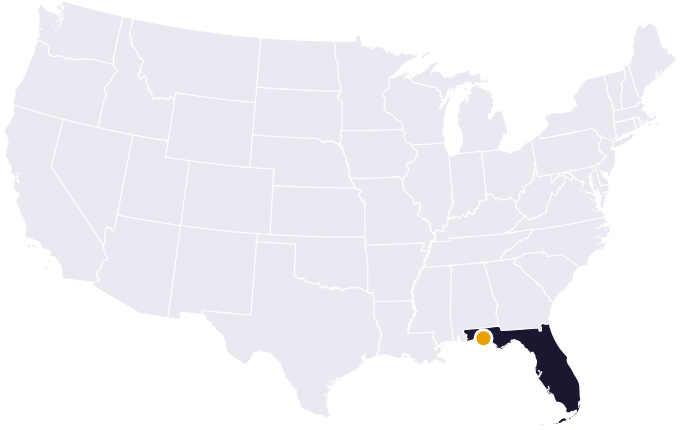
Yellow light: allowed with a $300 county registration and a one-hour local contact
Walton County requires short-term vacation rentals to register every year, at $300 per structure, with some exemptions.[1, 2] You must name a local responsible party who can respond within one hour, and operating without registration costs $500 a day.[1, 2] A local law may not prohibit vacation rentals or regulate how long or how often you rent them, but this doesn't apply to rules adopted on or before June 1, 2011.[3]
Our verdict, based on the sources at the end of this guide.
Santa Rosa Beach (ZIP code 32459) is covered by Walton County's registration program.[2] Unless an exemption applies, a short-term vacation rental needs a state license, a county tourist tax account and a county registration, and the registration costs $300 per structure each year.[2] You also need a local responsible party who can respond within one hour, plus signs, postings and fire safety checks.[2, 7] Operating without registration costs $500 a day.[1]
Key requirements
State and county accounts first
Before you register with the county, get a Florida DBPR license, a Florida Department of Revenue registration, and a Walton County tourist development tax account with the Clerk of Courts.[2] If the property is deeded to a company, register that business with the Florida Department of State first.[2] The DBPR license costs a $50 application fee and a $10 education fee, plus an annual fee that depends on capacity and district, with the state's examples starting at $170 for one unit.[8]
County registration
Apply through the county's online portal; the county charges $300 a year per rental structure, effective Feb 1, 2025.[1, 2] You need the application checklist and a notarized affidavit of compliance, plus an agent affidavit if a manager applies, and paper applications carry a $100 processing fee.[1] Exemptions cover owner-occupied homestead homes that file an affidavit, certain condominiums, cooperatives and multi-family developments under common rental management.[2]
Who can apply
Owners apply or designate a managing agent, who needs notarized signatures from the owners on the affidavit of compliance and the agent affidavit.[1, 2] The county code puts the duty on the owner, with a separate certificate for each dwelling unit, and no page we read mentions tenants, so plan on the owner registering and naming you as the managing agent.[1, 2, 9] The state's broker definition covers renting, or offering or agreeing to negotiate the rental of, real property, so managing a rental for an owner for pay may need a Florida real estate license.[10]
Local responsible party
Name a local responsible party who is at least 18, reachable 24 hours a day, 7 days a week, and able to respond within one hour of notice.[2, 9] They must monitor the rental at least once a week and arrange an alternate when they're unavailable, and only one responsible party is allowed per property at a time.[2, 9] If you can't reach the property within one hour yourself, you must name one.[2]
Zoning and renewal
The county says rentals are permitted in many zoning districts in unincorporated Walton County and aren't outright prohibited in zones allowing residential uses, and it points you to its GIS maps for zoning and Wildlife Protection Zones.[2] The county moved most registrations to a June 1 renewal with the window opening April 1, but properties in ZIP code 32459, the Santa Rosa Beach area, stay on their current cycle until the county says otherwise.[2] The county asks you to renew 60 days before your registration expires, and it sends a reminder 45 days before.[1]
Operational and safety standards
Occupancy and parking
Maximum occupancy is one person per 150 square feet of conditioned space, or a lower agreed maximum.[2] Existing units set their parking during certification, and new units need one space per 900 square feet of conditioned space.[2] You must advertise the number of onsite parking spaces.[2]
Signs and postings
Put a building sign no larger than 216 square inches where it's legible from the public right-of-way, showing the name, a 24/7 emergency number and the registration certificate number.[2] Post the required information on the back of or next to the main entrance door or on the refrigerator, not in a binder.[2]
Fire safety
Smoke detectors must work in all sleeping rooms, and carbon monoxide detectors must work outside sleeping rooms and on every floor in homes with gas appliances or an attached garage.[7] Every level needs a fire extinguisher with an annual inspection tag, and hardwired emergency lighting must light the primary doors and stairwells.[7] Three-story buildings need a certificate of balcony and stairway inspection from a qualified professional, and an evacuation map next to each bedroom door on the third floor and above.[2]
Advertising and leases
Every ad must include the registration certificate number and the tourist development tax registration number.[2] Guest leases must include the maximum occupancy, a notice of the county noise ordinance, trash and recycling pickup days, an evacuation order notice and the maximum onsite parking with a sketch.[2] The county doesn't ask you to submit your leases.[2]
Noise and trash
The county noise ordinance sets civil infraction fines up to $500 and possible criminal charges between 10:00 pm and 6:00 am.[2] Trash capacity must be 35 gallons per four occupants, rounded up.[2]
Tax obligations
State and county sales tax
Florida charges 6% state sales tax, plus any discretionary sales surtax, on rental periods of six months or less.[4] The state's surtax table lists a 1% Walton surtax.[5] Returns and payments are due on the 1st and late after the 20th of the month after each reporting period.[4]
Tourist development tax
Walton County's tourist development tax is 5% in ZIP codes 32459, 32550, 32454, 32461 and the Walton County portion of 32413, and 2% in the rest of the county, collected by the county.[6] The county's FAQ calls ZIP code 32459 the Santa Rosa Beach area.[2] Check your address's ZIP code against that list.
Accounts and ad numbers
Register with the Florida Department of Revenue, and register with the Walton County Clerk of Courts to remit the tourist development tax.[2] Your ads must show your tourist tax registration number.[2]
Booking platforms
The state says anyone who collects rent for an owner, such as a management company, must register to collect tax.[4] We could not confirm whether booking sites collect Walton's tourist tax, so keep your own account and filings.
Enforcement
No registration
Operating without registration costs $500 a day.[1] Late filing fees apply under county policy, and the page doesn't list the amount.[1]
Warnings and citations
First-time violations get a warning with a correction period, and non-compliance brings a citation.[2] Fines are set by resolution of the Board of County Commissioners for first, second, third and repeat violations, and each day a violation exists counts as a separate violation.[2, 9] The code calls the program progressive enforcement focused on compliance, and it lets the county seek other remedies such as injunctions and liens.[9]
Life safety and inspections
The county says there's no grace period for life-safety requirements, and you could be fined per day if you aren't already in compliance.[2] The county doesn't inspect before registration, but you sign an affidavit of compliance, and inspections can follow a notice from the state DBPR or a complaint.[2] The South Walton Fire District does the fire safety inspections, and violations found must be corrected and re-inspected within 30 calendar days.[1, 9]
Complaints
Neighbors can report violations to the county's 24/7 hotline at (850) 924-7887 or through its online complaint form.[1] The county office handles compliance, inspections and violations for short-term rentals.[1]
Selling or closing
If you sell or stop operating, email the office to close the account, pay outstanding fees in full and remove all online and print ads.[2]
Bottom line for arbitrage
Workable for the right property. Get the owner to register, line up a one-hour local contact and budget for the fire safety checks.
Step 1 is the hard part. We find landlords who already said yes →
Sources
Tell us your market. Our team calls landlords and sends you properties already approved for Airbnb.
- Landlord-approved listings
- New deals weekly
- Search any US market
More guides in this state
Browse all city guides →Rules tell you where. We find the landlord who says yes.
STR Exchange members get landlord-approved rentals, new deals every week and a team that searches their market.
- Landlord-approved listings
- New deals weekly
- Many markets