Stratford
Can you run an Airbnb or do rental arbitrage here? What the city requires: permits, taxes, safety rules and enforcement.
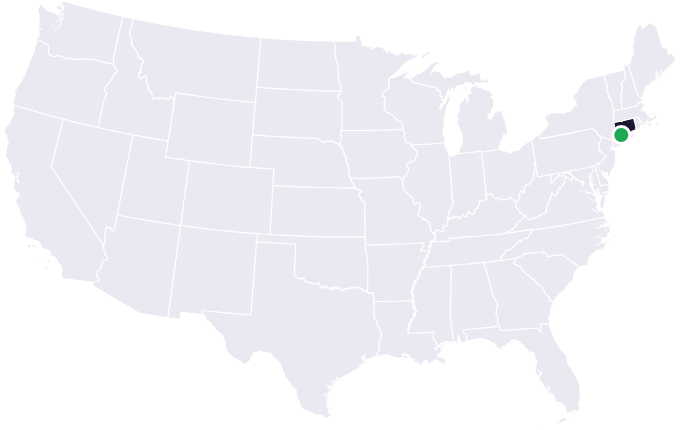
Green light: zoning says short-term rentals aren't regulated, so budget for the 15% state tax
Stratford's zoning regulations say short-term rentals, such as VRBO and Airbnb, are not a regulated activity in town.[1] We found no town code chapter, permit or fee for them as of Oct 6, 2026.[2] You still owe Connecticut's 15% room occupancy tax on stays of 30 days or less.[3]
Our verdict, based on the sources at the end of this guide.
Stratford's zoning regulations say short-term rentals, such as VRBO and Airbnb, are not a regulated activity in town.[1] We found no town code chapter, permit or fee for them as of Oct 6, 2026.[2] You still owe Connecticut's 15% room occupancy tax on stays of 30 days or less, and booking platforms that qualify as facilitators collect it on their sales.[3, 4] State law lets towns adopt a short-term rental licensing ordinance, so watch for one.[5]
Key requirements
No town permit found
We found no Stratford permit, registration or license for short-term rentals as of Oct 6, 2026.[2] The town code's chapter list has none on short-term rentals or lodging.[2]
Zoning treatment
Section 4.4.9.E says short-term rentals, such as VRBO, Airbnb or similar rentals, are not a regulated activity in Stratford.[1] The section sits under the heading Boarding, Boarding Houses, Short-Term Rentals.[1]
Unlisted uses
Unless the consolidated use table allows it, any use of land, buildings or structures that isn't expressly permitted in a district is prohibited in that district.[1] The exception is a use the Zoning Commission determines to be similar in nature.[1]
Bed and breakfast inns
If you run a bed and breakfast instead, the regulations define a bed and breakfast inn as a single-family, owner-occupied dwelling with no more than three guest rooms and a maximum of six guests.[1]
Operational and safety standards
No operating rules found
We found no Stratford rule on owner occupancy, listing numbers, local contacts, insurance, inspections or signage for short-term rentals.[1, 2]
Occupancy definitions
The zoning regulations define a family as a group related by blood, marriage or adoption, or up to three unrelated individuals, or a group living together as a functional family.[1] They define a boarding house as a single-family structure occupied by three to five unrelated individuals.[1]
General town chapters
The town code has chapters on housing standards, property maintenance and noise.[2] Check them before you list.
Tax obligations
State room occupancy tax
Connecticut charges a 15% room occupancy tax on hotels, motels, lodging houses and short-term home rentals.[3] It applies to stays of 30 consecutive calendar days or less and stops on the 31st consecutive day of occupancy by the same person.[3] The state charges $100 to register for it.[3]
Booking platforms
A short-term rental facilitator, meaning a business that handles at least $250,000 in retail sales over twelve months, collects the rent and is paid for it, must register with the Department of Revenue Services (DRS) and collect and remit the tax.[4] You aren't liable for collecting the tax to the extent a facilitator collected it.[4]
Direct bookings
If you sell only through facilitators, you don't need to register with DRS.[4] If you also sell outside a platform, you must register and collect the tax on those sales, and the return is Form OP-210.[4] You register online through myconneCT.[3]
Enforcement
No town penalty found
We found no Stratford fine, suspension or revocation rule aimed at short-term rentals.[2]
State authority
Public Act 24-143, effective Oct 1, 2024, lets a municipality adopt an ordinance requiring licensure of short-term rental properties and regulating how they operate.[5] It also lets a municipality engage consultants to help develop that ordinance.[5] We found no such ordinance in Stratford.[2]
Bottom line for arbitrage
You can run here. Get the zoning office to confirm in writing, then budget for the 15% state tax.
Step 1 is the hard part. We find landlords who already said yes →
Sources
Tell us your market. Our team calls landlords and sends you properties already approved for Airbnb.
- Landlord-approved listings
- New deals weekly
- Search any US market
More guides in this state
Browse all city guides →Rules tell you where. We find the landlord who says yes.
STR Exchange members get landlord-approved rentals, new deals every week and a team that searches their market.
- Landlord-approved listings
- New deals weekly
- Many markets