Alexandria
Can you run an Airbnb or do rental arbitrage here? What the city requires: permits, taxes, safety rules and enforcement.
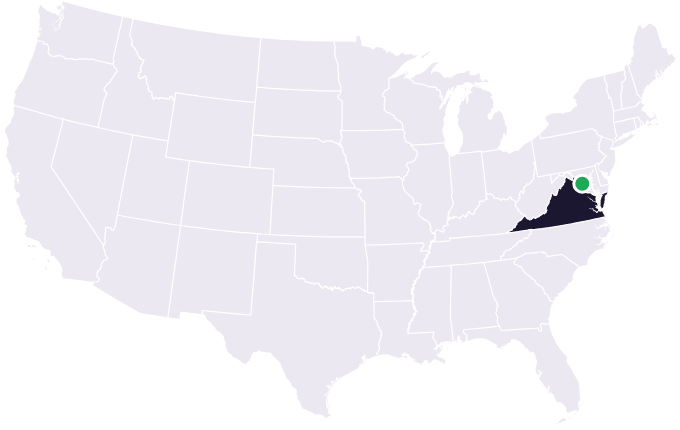
Green light: allowed with a $350 permit, and a tenant can hold it
Alexandria allows short-term rentals the owner doesn't live in, with a permit that costs $350 a year.[1] A tenant can apply with the owner's signed permission letter,[1] and the city's staff report says density rules weren't part of the proposal.[2] The rules are detailed, though, with parking minimums, occupancy limits and a one-hour response rule for complaints.[1, 3]
Our verdict, based on the sources at the end of this guide.
Alexandria allows short-term rentals the owner doesn't live in, with a city permit that costs $350 a year.[1] A tenant can apply with the owner's signed permission letter.[1] The rules took effect Sept 1, 2025,[1] and add occupancy limits, parking minimums and a one-hour response rule for complaints.[3] Rentals are also taxed three ways: a sales tax, a city lodging tax with a nightly fee, and a state lodging tax.[4, 5, 6]
Key requirements
City permit
Get a Short-Term Residential Rental Permit from Planning and Zoning if you operate a property as a short-term rental for more than 10 days a year.[1, 3] The annual fee is $350 for owner-unoccupied rentals and $100 for owner-occupied ones, and it's non-refundable.[1] Apply online through the city's APEX system.[1]
Who can apply
The applicant can be the owner, a contract purchaser, a lessee or another party with a legal interest in the property.[3] If the property is leased, you must provide the owner's written consent and the owner's contact information.[3] The city calls this a signed and dated owner's permission letter,[1] and state registry rules call for an attestation that the owner granted permission when the operator is a lessee or sublessee.[7]
Application papers
Include photos and a signed certification that smoke detectors, carbon monoxide detectors and fire extinguishers are installed, plus parking location maps, the bedroom count and the proposed occupancy.[3] You also certify that the Good Neighbor Guide is posted inside the unit.[3]
Neighbor notice
After the city accepts your application, send written notice by registered or certified mail to the owner, if that isn't you, and to all abutting properties.[3] The notice lists the address, permit number and expiration, maximum occupancy, a 24/7 contact and how to submit complaints, and the permit is granted only after the city confirms proper notice.[3] Then send the city the mailing receipt and sign the permit to begin operating.[1]
Accessory dwellings
You can't list or lease both a principal dwelling and an accessory dwelling on the same lot as short-term rentals at the same time.[3] An accessory dwelling is limited to three people, not counting children ages three and under.[3]
Operational and safety standards
Occupancy
Occupancy is limited to two people per legal bedroom plus two more, not counting children ages three and under, at all times.[3] A rental with five or more bedrooms is capped at ten people.[3]
Parking
Provide 0.75 parking spaces per bedroom outside the Enhanced Transit Area, or 0.25 per bedroom inside it.[3] If you can't park on-site, up to two on-street spaces can count, and inside the Enhanced Transit Area a signed parking agreement within 500 feet can too.[3]
Safety equipment
Keep at least one smoke detector on each habitable level and inside and outside each bedroom, a carbon monoxide detector on each level with bedrooms, and at least one fire extinguisher per floor.[1] The city can inspect during the application and while the permit is in effect, with prior notice for interior visits.[3]
Guest information
Give guests the city's Good Neighbor Guide at least 24 hours before arrival and post it inside the unit.[3] It lists the 24/7 contact, the maximum occupancy, nightly quiet hours and the parking rules.[3]
Parties and complaints
In residential zones, gatherings above the maximum occupancy are prohibited at all times, while commercial, office, industrial and mixed-use zones allow occasional events within set hours.[3] You or your local agent must be reachable by phone 24/7, and occupancy, party and noise violations must be addressed within one hour of the city's notice.[3]
Tax obligations
Sales tax
Virginia Tax lists a 6% sales tax rate for Northern Virginia, which includes Alexandria.[6] The city says that combined 6% is charged on all room rentals.[8]
Lodging tax
City Code sets a lodging tax of 6.5% of the room rental plus $1.25 for each day of lodging.[4] The city's tax page adds a 3.0% state transient occupancy tax, which makes 9.5% plus $1.25 per night.[5] The city says short-term rentals pay the same rate as hotels and motels.[8]
City registration
The city's tax page says every short-term rental host must register with the Department of Finance each year.[5] The registry page says to register within 30 days of offering the rental, with a $500 penalty if you don't.[9]
Booking platforms
Since Oct 1, 2022, a booking platform that acts as an accommodations intermediary must collect the tax computed on the room charge.[10] Intermediaries send the city a monthly report, and hosts who book direct stay responsible for their own tax.[5, 10]
Filing and late fees
Lodging tax reports and payments are due on or before the last day of each month, for the month before.[4] A late payment adds a penalty of 10% of the tax or $10, whichever is greater, plus interest.[4]
Enforcement
No permit
Failing to get a permit brings a civil citation.[3] The city's page lists $200 for the first citation, then $500 every 10 days until you submit an application.[1] After two or more repeated violations, you can't apply for a permit for that property or offer it for rent for one year.[3]
Revocation
The city can revoke or deny a permit, with 30 days' notice, for an incomplete application, false or misleading information, three or more violations of the same city law in a permit year, or five or more violations of separate sections.[3] It can revoke at once if a violation endangers the health and safety of guests or neighbors, and the notice describes the appeals procedure.[3]
Complaints
Neighbors contact the operator or local agent first.[1] If that fails, they call Alex311 at 703.746.4311, use the after-hours STR hotline at 703.215.3609, or file online.[1]
State law
Virginia lets localities set up short-term rental registries, with penalties up to $500 per violation for an operator who offers an unregistered property.[7] A local ordinance enacted after Dec 31, 2023 can't require a special exception, special use or conditional use permit for a home the owner lives in as a primary residence.[7]
Bottom line for arbitrage
A tenant can hold the permit here, so this works for arbitrage. Do the parking math and get the landlord's letter before you sign.
Step 1 is the hard part. We find landlords who already said yes →
Sources
Tell us your market. Our team calls landlords and sends you properties already approved for Airbnb.
- Landlord-approved listings
- New deals weekly
- Search any US market
More guides in this state
Browse all city guides →Rules tell you where. We find the landlord who says yes.
STR Exchange members get landlord-approved rentals, new deals every week and a team that searches their market.
- Landlord-approved listings
- New deals weekly
- Many markets