Anna Maria
Can you run an Airbnb or do rental arbitrage here? What the city requires: permits, taxes, safety rules and enforcement.
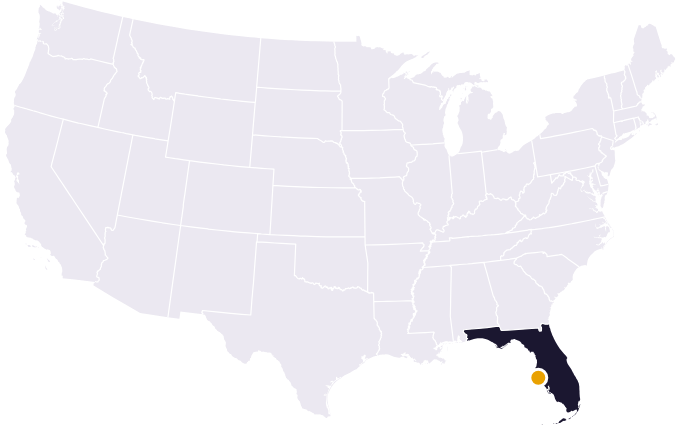
Yellow light: allowed with a city registration, an 8-guest cap and yearly inspections
Anna Maria's code regulates vacation rentals instead of banning them, so each rental needs its own city registration.[1] The catch is a guest cap that tops out at eight, an inspection after you first register and every year after,[1] and a 2026 fee of $100.20 per occupant.[2]
Our verdict, based on the sources at the end of this guide.
Anna Maria regulates vacation rentals but doesn't ban them.[1] Register each rental with the city, pass an inspection every year and keep guests under a cap that tops out at eight.[1] The 2026 fee is $100.20 per occupant,[2] and new registrations can't advertise or rent until they pass inspection.[6] Manatee County says it has no contract with Airbnb or VRBO to collect its 6% tourist tax, so you file it yourself.[7]
Key requirements
City registration
Register each vacation rental with the city and renew it every year before it expires.[1] A separate registration is required for each rental, and it is valid for one year.[1] New registrations can't advertise or rent until the property passes inspection.[6]
What you submit
The registration form comes with the fee, an exterior site sketch that shows the parking spaces and an interior sketch of each floor.[1] The code also asks for your DBPR license, your Department of Revenue certificate and your Manatee County Tax Collector account if you have them, and the city's page lists all three as required documents.[1, 6]
If you're the tenant
The registration belongs to the owner, who can file personally or through an agent named to the city in writing on a city form.[1] The city's page lists a Change of Management form next to its new registration, renewal and change of ownership forms, so ask which one names an agent.[6] Managing a rental for an owner for pay may need a Florida real estate license, since the state's license law defines a broker to include someone who, for another and for pay, rents or offers or agrees to negotiate the rental of real property.[8]
State license
Florida requires a DBPR vacation rental license if you rent an entire unit more than three times a year for stays under 30 days, or advertise it as regularly rented.[9] A new application costs $50 plus a $10 Hospitality Education Program fee, and the license fee starts at $170 for one unit for a full year.[9]
State law
Florida Statutes section 509.032(7)(b) says a local rule may not prohibit vacation rentals or regulate how long or how often they are rented, and it exempts rules adopted on or before June 1, 2011.[10] Anna Maria's chapter says it does not prohibit vacation rentals or regulate their duration or frequency.[1]
Operational and safety standards
Guest cap
Your maximum occupancy is the lesser of two persons per bedroom of at least 100 square feet, plus one per bedroom of 70 to under 100 square feet, plus two, or eight occupants.[1] With more than one building on a platted lot, the cap is eight per lot or per structure, whichever is less.[1] The cap doesn't apply when the owner or the owner's family is the one staying there without paying rent.[1]
Rental agreement
Every stay needs a written rental agreement that states the maximum occupancy, the maximum number of vehicles and that guests must leave promptly on any evacuation order.[1] The vehicle limit can't exceed the parking spaces on your registration sketch plus any other legal spaces you can show.[1] The agreement must also attach the city's excerpts on trash pickup, sea turtle lighting and noise.[1]
Posting
Post these in a prominent place: the owner or agent's name, address and phone number, the maximum occupancy, the city's ordinance excerpts, the vehicle limit with a parking sketch, trash pickup days and the nearest hospital.[1] Put an evacuation map of at least 8.5 by 11 inches next to each bedroom's interior door.[1] The city's welcome book lists pool, spa and hot tub quiet hours of 10:00 PM to 8:00 AM.[11]
24-hour contact
The owner or agent must answer a listed phone number 24 hours a day, seven days a week, for police, fire and other emergency requests.[1] For city regulatory staff, you need to respond only Monday through Saturday, 9:00 AM to 6:00 PM.[1]
Safety and advertising
Each rental must meet the applicable Florida Statutes, Florida Building Code and Florida Fire Code and Life Safety Code standards, and have at least one phone that can call 911.[1] The city's page points to NFPA standards and Florida's pool safety law for rentals with pools.[6] Advertising more occupants than your registration allows counts as misleading advertising under the city code.[12]
Tax obligations
State sales tax
Florida's 6% state sales tax, plus any discretionary sales surtax, applies to transient rentals.[3] Register with the Department of Revenue, and file returns by the 20th day after each reporting period even when no tax is due.[3]
County surtax
Manatee County's discretionary sales surtax is 1% for 2026.[4]
Tourist development tax
Manatee County's tourist development tax is 6%, and the county collects it.[5] The Tax Collector says the county has no contract with Airbnb, VRBO, Evolve or any other booking platform to collect or remit it for you.[7] Its page notes the 6% rate took effect January 1, 2025.[13]
Total
On a short-term stay that adds up to 13%: 6% state, 1% surtax and 6% tourist tax.[3, 4, 5] The Tax Collector's page gives the same 13% total, split as 7% to the Department of Revenue and 6% to the county.[13]
City occupational license
The city requires an occupational license tax from owners of rental real property, and each rental property counts as its own place of business.[14] The amount is set in a schedule on file in the city clerk's office, which the code doesn't print.[14] Doing business without the license adds a penalty of 25 percent of the license due.[14]
Enforcement
No registration
Running a vacation rental without registration is a violation of the chapter, and every day of operation counts as a separate violation.[1]
Inspections
If you don't make the rental available within 20 days after the city's written notice that it is ready to inspect, that is a violation for each day it continues.[1] If you or a guest block an appointment, you pay a re-inspection fee set by city resolution before the city reschedules.[1]
Fines
Chapter 108 violations go through the city's code enforcement system, with fines set by city resolution.[1] A special magistrate can fine an irreparable or irreversible violation up to $5,000 per violation, plus an administrative fee.[15]
Changes and sales
You must amend the registration before you add bedrooms, raise the maximum occupancy, change the number or location of parking spaces or change ownership.[1] A registration transfers only when the property is sold or transferred and the new owner files a modification within 30 days, or it becomes void on the 31st day.[1]
Appeals
You can appeal a decision of the mayor or the mayor's designee to the city's special magistrate by filing notice with the city clerk within ten days.[1]
Bottom line for arbitrage
You can run a tenant-operated rental here if the owner files for you. Budget for the 8-guest cap, a per-guest fee and a yearly inspection.
Step 1 is the hard part. We find landlords who already said yes →
Sources
Tell us your market. Our team calls landlords and sends you properties already approved for Airbnb.
- Landlord-approved listings
- New deals weekly
- Search any US market
More guides in this state
Browse all city guides →Rules tell you where. We find the landlord who says yes.
STR Exchange members get landlord-approved rentals, new deals every week and a team that searches their market.
- Landlord-approved listings
- New deals weekly
- Many markets