Atlanta
Can you run an Airbnb or do rental arbitrage here? What the city requires: permits, taxes, safety rules and enforcement.
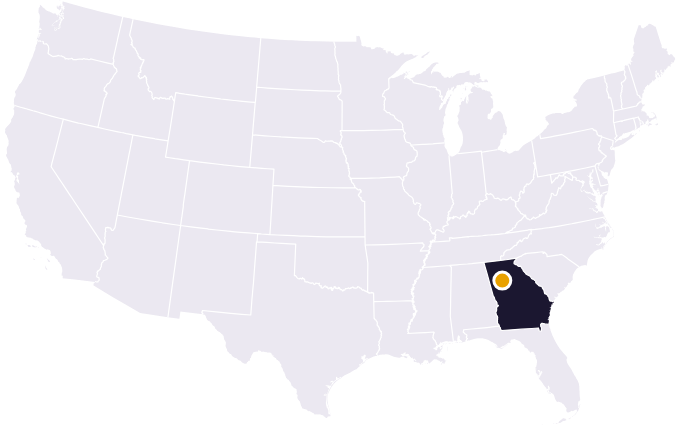
Yellow light: licensed rentals, a two-unit limit that ends Jan 1, 2027
Atlanta licenses short-term rentals for an owner or long-term tenant, and the code covers a primary residence plus one additional unit.[1] Ordinance 26-O-1510, adopted Sep 21, 2026, strikes that limit effective Jan 1, 2027.[2] A license costs $150 a year, and the city says it can take up to 10 business days.[3]
Our verdict, based on the sources at the end of this guide.
Atlanta requires a $150 short-term rental license, and an owner or a long-term tenant can hold it.[1, 3] Today the code covers a primary residence plus one additional unit.[1] Council voted 9 to 5 on Sep 21, 2026 to remove that limit, effective Jan 1, 2027.[2] A short-term rental is 30 consecutive days or less, and the city adds an 8% hotel-motel tax.[1] A news report says council barred new rentals in the Home Park neighborhood in Aug 2025.[5]
Key requirements
License required
You need a short-term rental license before you rent all or part of a dwelling unit for 30 consecutive days or less.[1] Apply through the city's online permitting portal, which takes applications daily with no deadline.[3]
Who can hold it
The code lets a short-term rental owner or a long-term tenant get the license.[1] The city's FAQ says the owner, an authorized agent or a long-term tenant can apply, and its forms list includes a homeowner affidavit for long-term tenants, so ask your landlord early.[3]
Primary residence plus one unit
Until Jan 1, 2027, the code covers a primary residence and one additional dwelling unit.[1] The city says you license your primary residence first, and you can rent either unit or both.[3] Ordinance 26-O-1510 strikes those words effective Jan 1, 2027, and WABE reports that a proposed two-unit cap was rejected.[2, 6]
Fee and renewal
The fee is $150 and non-refundable with each annual application.[1] A license is valid for 12 months and the city emails a reminder 30 days before it expires.[3] No license can be transferred or used at any other address.[1]
Neighborhood limits and other codes
A news report says council barred new short-term rentals in the Home Park neighborhood in Aug 2025, while existing licensed rentals may continue.[5] WABE reports a ban in north Buckhead was rejected a few months later.[6] The license doesn't override the zoning ordinance, housing code, building code or business tax registration.[1]
Operational and safety standards
Agent
Name a short-term rental agent on your application, and the owner may serve as agent.[1] The agent must be available to handle problems, post a name and emergency number in the unit, accept service of violation notices, monitor compliance and list the license number on each online listing.[1] The city's FAQ says an owner's tenant or another owner-authorized individual can also be the agent.[3]
Application papers
The application needs the unit's address, the agent's 24-hour contact details, the number and location of parking spaces and the agent's signed acknowledgment.[1] Send certified mail to each adjacent property with the unit's address and the agent's contact details.[1] If the agent changes, tell the city within ten business days.[1]
Rules and signage
Post written rules in the unit covering noise limits, a maximum of two adults per bedroom, parking, and an acknowledgment that violations can mean eviction and fines.[1] No external signage is allowed, and a copy of the license goes inside with the agent's contact details, license number, maximum occupancy and maximum vehicles.[1]
Booking platforms
License holders must make sure the platforms they use give neighbors a phone line or website for concerns and help educate agents about the ordinance.[1] The city's page says hosting platforms must also provide information to help remove illegal listings.[3]
Tax obligations
Hotel-motel tax
Short-term rentals are subject to the city hotel-motel tax of eight percent of the charge, under O.C.G.A. 48-13-51.[1] The code makes you responsible for paying the state and local taxes that apply.[1]
Sales tax
State sales tax applies to charges for rooms and lodging furnished to transients, including by owners of private residences and rental agents.[7] The Oct 1, 2026 state rate chart lists 8.9% for Atlanta, which includes the 4% state rate.[4]
State fee and booking sites
Georgia charges a state hotel-motel fee of $5 per night, and the state's FAQ says the marketplace innkeeper, usually a booking platform, collects and remits it on each night of the stay.[8] The fee stops on the 31st day of continuous occupancy.[8]
Longer stays
Stays over 30 consecutive days fall outside the city's short-term rental definition.[1] State sales tax doesn't apply to rooms furnished to one person for 90 continuous days or more.[7]
Enforcement
No license
Operating without a license is unlawful and brings citations and a mandatory one year wait before the city accepts an application.[3]
Fines and revocation
Fully adjudicated violations are assessed $500 each.[1] After three violations for the same property, the city revokes pending licenses and rejects all applications for that property for 12 consecutive months.[1]
Complaints
Neighbors send complaints to the city's code enforcement or STR email, and each gets a case number.[3] Police handle violations at units with an active license, and Zoning Enforcement handles units without one.[3]
Appeals
A written appeal of a revocation, suspension or denial goes to the chief operating officer within 30 calendar days.[1] The final ruling can be appealed by certiorari to the Superior Court of Fulton County.[1]
Enforcement timing
The city's page still cites an enforcement date of March 5, 2023, and says the appeal process starts on the enforcement date.[3] The sponsor of the 2026 change told WABE the planning department will enforce the ordinance, which takes effect in January 2027.[6]
Bottom line for arbitrage
Atlanta works for you, and it gets easier on Jan 1, 2027. Get your landlord's written OK before you apply.
Step 1 is the hard part. We find landlords who already said yes →
Sources
Tell us your market. Our team calls landlords and sends you properties already approved for Airbnb.
- Landlord-approved listings
- New deals weekly
- Search any US market
More guides in this state
Browse all city guides →Rules tell you where. We find the landlord who says yes.
STR Exchange members get landlord-approved rentals, new deals every week and a team that searches their market.
- Landlord-approved listings
- New deals weekly
- Many markets