Charlotte
Can you run an Airbnb or do rental arbitrage here? What the city requires: permits, taxes, safety rules and enforcement.
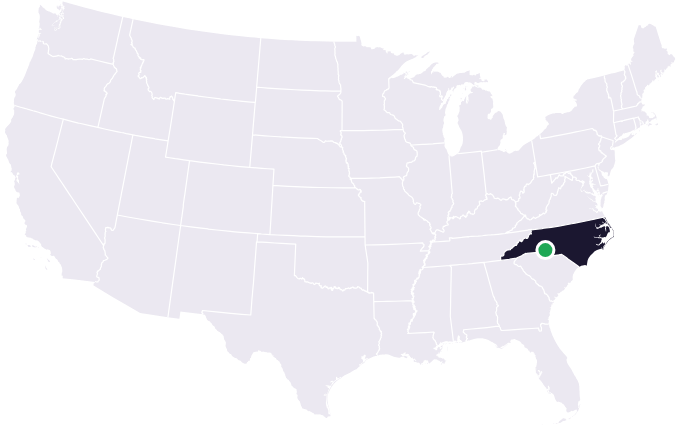
Green light: no city permit found, so check taxes and any HOA first
We found no city short-term rental rules as of Oct 2, 2026.[1, 2] State law also limits a city's power to require a permit or registration to rent residential property.[3] You still owe sales tax, which is 8.25% in Mecklenburg County since July 1, 2026,[4] and county room occupancy taxes that the county's return form puts at 6% and 2%.[5]
Our verdict, based on the sources at the end of this guide.
Charlotte has no short-term rental permit that we could find.[1, 2] News reports say the city dropped its proposed rules in 2022 after a court ruling on Wilmington's rules.[7, 8] State law also limits a city's power to require a permit or registration to rent residential property.[3] The real costs are taxes: Mecklenburg County's sales tax rose to 8.25% on July 1, 2026,[4] and the county's return form adds 6% and 2% room occupancy taxes.[5]
Key requirements
City rules
We found no city short-term rental rules as of Oct 2, 2026.[1] We searched the full text of the zoning code, amended March 23, 2026, and found no short-term rental or vacation rental use.[1] The city's zoning FAQ doesn't address them either.[2]
Bed and breakfast rule
The code defines a bed and breakfast as a single-family home where a permanent resident or owner provides lodging for a daily fee, and it limits guests to seven consecutive days.[1] That use needs a zoning use permit.[1] Ask the city's zoning staff how it treats a whole-home rental run by someone who doesn't live there.
State limit on permits
G.S. 160D-1207(c) bars a city from requiring an owner or manager of rental property to get a permit or permission under Article 11 or 12 of that chapter to rent residential property, or to register rental property.[3] There are exceptions for properties with more than four verified violations in a rolling 12 months, two or more in a rolling 30 days, or a spot in the top ten percent for crime or disorder under a local ordinance.[3]
Tax accounts
File and pay state sales tax on accommodation rentals electronically on Form E-500.[9] Mecklenburg County runs a separate room occupancy tax return.[10]
Operational and safety standards
Inspections
A city inspection department may make periodic inspections for unsafe, unsanitary or otherwise hazardous and unlawful conditions.[11] Inspectors may enter at reasonable hours with credentials, and dwelling inspections must follow G.S. 160D-1207.[11]
Utilities
A city can't require an owner or manager of rental property to submit to an inspection before getting utility service.[3]
State vacation rental law
North Carolina's Vacation Rental Act covers renting residential property for vacation, leisure or recreation for fewer than 90 days.[12] It applies to landlords and real estate brokers who manage those rentals, and it defines a landlord as an owner of the property.[12]
Fees you charge guests
Cleaning, pet, damage, linen and reservation fees are part of the taxable rental receipts, and so are security deposits.[9] Separately stated internet, parking and cancellation fees, third-party trip insurance and refunded security deposits are not.[9]
Tax obligations
Sales tax
Renting an accommodation, including a residence or cottage, is subject to the general state and applicable local and transit sales tax rates, plus any local occupancy tax.[9] Mecklenburg County's combined rate is 8.25% as of July 1, 2026, after voters approved an extra 1% on Nov 4, 2025.[4, 13]
Room occupancy tax
State law sets Mecklenburg County's maximum room occupancy tax at 8%.[14] The county's return form applies a 6% tax and a 2% tax to net retail receipts, 8% in all by our sum, due by the 20th of the following month.[5] The county describes the tax as based on rentals furnished by a hotel, motel, inn, tourist camp or similar place.[10]
Who collects
A 2012 state notice defines the retailer as the person who provides the accommodation or who agrees by written contract to be its rental agent.[6] It says room occupancy taxes are not administered by the state revenue department and should not be sent to it with sales taxes.[6]
Booking platforms
A platform that collects the payment, or part of it, for the rental may be treated as the retailer and must report and remit the tax.[15] Whether a platform also covers the county occupancy tax isn't stated on the county pages we read.[10]
Stays of 90 or more days
Renting to the same person for 90 or more continuous days isn't subject to sales or room occupancy tax.[6, 15]
Enforcement
Permit and registration limits
Under G.S. 160D-1207(c), the exceptions to the permit and registration bar apply to individual properties with repeat violations or crime and disorder problems, not to rentals in general.[3] A city also can't make a violation of a rental registration ordinance a criminal offense.[3]
Fees and penalties
A city can't levy a special fee or tax on residential rental property that other properties don't also pay, unless general law allows it or the fee applies only to a property that falls under the exceptions above and doesn't exceed $500 in any 12-month period.[3]
City rules in 2022
A May 2, 2022 news report says the city dropped its proposed short-term rental rules while it waited for clearer legal guidance and possible state action.[7] The proposal had included a 400-foot separation rule and a ban on parties and events.[8]
Pending state bill
Senate Bill 291 was filed on Mar 13, 2025 and sent to the Senate Rules and Operations Committee on Mar 17, 2025, and its page shows no later action.[16] As filed, it would bar cities from banning short-term rentals, limiting rental nights or requiring owner occupancy, and would let them require permits with a one-time fee of up to $25.[17]
Bottom line for arbitrage
Charlotte is open for now. Set up your tax accounts first, and get zoning and your landlord's OK in writing.
Step 1 is the hard part. We find landlords who already said yes →
Sources
Tell us your market. Our team calls landlords and sends you properties already approved for Airbnb.
- Landlord-approved listings
- New deals weekly
- Search any US market
More guides in this state
Browse all city guides →Rules tell you where. We find the landlord who says yes.
STR Exchange members get landlord-approved rentals, new deals every week and a team that searches their market.
- Landlord-approved listings
- New deals weekly
- Many markets