Colorado Springs
Can you run an Airbnb or do rental arbitrage here? What the city requires: permits, taxes, safety rules and enforcement.
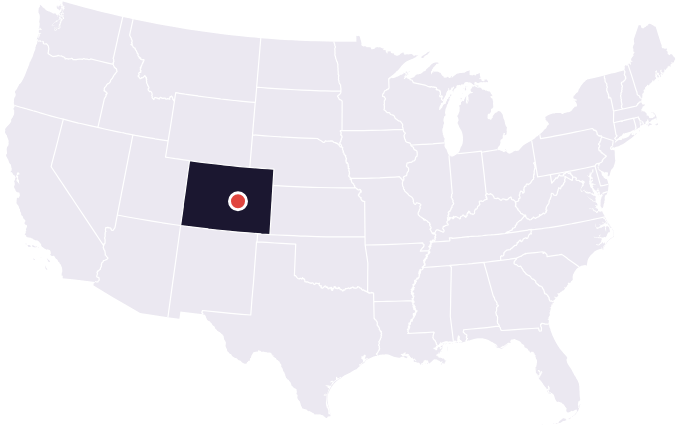
Red light: non-owner rentals barred in single-family zones, 500 feet apart elsewhere
Short-term rentals the owner doesn't live in are not allowed in R-E, R-1 9, R-1 6 or single-family PDZ zones, and must be at least 500 feet from another one elsewhere.[1] The $124.95 permit is issued to the property owner, so your landlord applies.[2, 3] The city has no cap and no waiting list for these permits.[2]
Our verdict, based on the sources at the end of this guide.
Colorado Springs has no cap on short-term rentals, but the rules for units the owner doesn't live in are tight: not allowed in single-family zones, and at least 500 feet from another one elsewhere.[1, 2] The permit costs $124.95 a year and is issued to the owner, and it expires if the property is sold.[2, 3] Properties with an accessory dwelling unit can't get a permit as of June 30, 2025, with limited grandfathering.[2] Colorado has no statewide short-term rental regulations.[6]
Key requirements
Zoning and spacing
A non-owner-occupied short-term rental can't be in the R-E, R-1 9 or R-1 6 zone districts or single-family PDZ districts.[1] Elsewhere, it can't be within 500 feet of another non-owner-occupied short-term rental.[1] The city says there is no waiting list for these permits and points you to Springs View to check zoning.[2]
Owner holds the permit
The permit is issued to the specific owner of the property, can't be transferred, and expires when the property is sold or transferred.[3] A third party can manage it on the owner's behalf.[3] The application asks you to elect an owner-occupied or non-owner-occupied permit.[3]
Application and fee
Apply online through the city's Applications and Reviews portal and pay $124.95.[2] The checklist asks for a signed affidavit, proof of at least $500,000 in liability insurance and proof of your hosting platform listing, and staff have 10 business days to review a complete application.[2]
Per-unit and ADU limits
Each listing needs its own permit application and fee.[2] For non-owner-occupied permits, the city lists 1 listing in single-family zones, 2 in R-2 zones and up to 4 on multi-family-zoned properties, and an owner can run at most 2 in a condo or common-ownership building.[2] Since June 30, 2025, a property with an ADU can't be used as a short-term rental, except where both were legal on or before that date.[2]
Renewal
The permit lasts one year and you must renew it without a lapse.[2] There is no grace period, and a missed renewal can bring a Code Enforcement notice and, for non-owner-occupied units, possible loss of the permit.[2]
Operational and safety standards
Guest limit
Maximum overnight occupancy is two occupants per bedroom plus two more per dwelling unit, up to 15 per dwelling unit.[1]
Parking, meals and events
Use private driveways first, with overflow on the street where permitted, and don't park in front yards, parkways or rear yards.[1] Don't prepare or serve meals to guests, and don't host commercial or large social events such as weddings.[1]
Posting and marketing
Display the permit, local contact information and emergency safety information in the unit.[1] Use the city-issued permit number in all rental marketing.[1]
Local contact
The owner or a designated local contact must be available at all times during a stay and respond to complaints within one hour.[1] If the contact changes, update the permit within three days.[1]
Insurance and trash
Carry at least $500,000 in property liability insurance, or show a hosting platform provides that coverage.[1] Keep weekly residential trash collection in place.[1]
Tax obligations
City lodgers tax
Colorado Springs charges a lodgers tax of 2% of the purchase price of lodging for stays of less than 30 consecutive days.[4] The purchase price includes marketplace facilitator fees.[4]
City sales tax and license
The city sales tax rate is 3.07%.[7] Platforms like Airbnb and VRBO collect and remit it on their own city licenses, but if you book on your own you need a City Sales Tax License, and taxes owed to the city must be paid before the permit is issued.[2]
State, county and transit taxes
Colorado's 2.90% state sales tax applies to rooms and accommodations, and state-administered local sales taxes apply to the same sales.[8] The county rate is 1.23% and the Pikes Peak Rural Transportation Authority rate is 1.00%.[9] With the city's 3.07%, that's 8.20%, and 10.20% with the 2% lodgers tax (our sum).[4, 5]
State license and platforms
Anyone who offers rooms or accommodations for rent needs a state sales tax license.[10] A marketplace facilitator must collect and remit the state and state-administered sales taxes, plus any county lodging tax and local marketing district tax.[10]
30-day stays
Occupancy under a written agreement of at least 30 consecutive days gets relief from the state sales tax on rooms.[10] The city's lodgers tax covers stays of less than 30 consecutive days.[4]
Enforcement
No permit
It's unlawful to operate a short-term rental without a valid permit.[1] Neighbors can check Springs View for a permit and report an unpermitted rental to Neighborhood Services or Code Enforcement.[2]
Eligibility
You can't get or keep a permit if you're a repeat offender or chronic repeat offender, or if you had a short-term rental permit revoked in the previous two years.[1] You also must hold a city sales tax license and not owe the city.[1]
Reinspection fees and liens
For a first-time offender with a residential use, reinspection fees after a failure to comply with an abatement order are $100, $250, then $500 for each later visit.[11] Repeat offenders pay $250 and chronic repeat offenders $500 per reinspection, and unpaid fees can become a lien on the property.[11]
Complaints
Neighbors call 911 for emergencies and the police non-emergency line at 719-444-7000 for issues like loud parties.[2]
Recent changes
The city's ordinance list shows Ordinance 25-45 on accessory dwelling units as the latest short-term rental change.[2] The city code was current through Ordinance 26-23, passed June 9, 2026, when we read it.[12]
Bottom line for arbitrage
Only chase Colorado Springs if your landlord's property sits outside single-family zones and 500 feet from another non-owner rental. Check the map before you sign.
Step 1 is the hard part. We find landlords who already said yes →
Sources
Tell us your market. Our team calls landlords and sends you properties already approved for Airbnb.
- Landlord-approved listings
- New deals weekly
- Search any US market
More guides in this state
Browse all city guides →Rules tell you where. We find the landlord who says yes.
STR Exchange members get landlord-approved rentals, new deals every week and a team that searches their market.
- Landlord-approved listings
- New deals weekly
- Many markets