Hollywood
Can you run an Airbnb or do rental arbitrage here? What the city requires: permits, taxes, safety rules and enforcement.
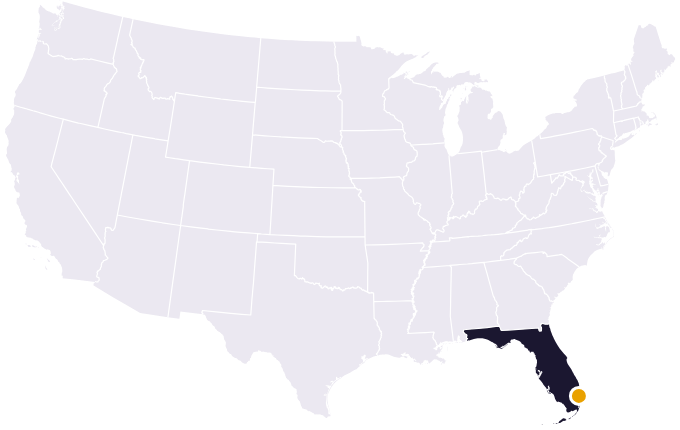
Yellow light: allowed with a license, but the rules and enforcement are heavy
A local law may not prohibit vacation rentals or regulate how long or how often you rent them, but this doesn't apply to rules adopted on or before June 1, 2011.[1] Hollywood still requires a separate license for each rental, issued to the owner and renewed each Sept 30.[2, 3, 4] Operating without one can cost up to the greater of $5,000 per day or the maximum amount allowed by law.[5]
Our verdict, based on the sources at the end of this guide.
Hollywood requires a separate license for every vacation rental, and it's issued to the property owner.[2, 4] A non-owner-occupied rental costs $850 to apply and $600 a year to renew, plus inspection fees.[7] On top of state and Broward County accounts, you need noise monitors, a 24/7 representative and a city inspection before each license and renewal.[6, 12, 13] Running without a license can cost up to the greater of $5,000 per day or the maximum amount allowed by law.[5]
Key requirements
State and county accounts first
Get a state DBPR license, a Florida Department of Revenue registration if it applies, and a Broward County Tax Collector account before you apply to the city.[6] The DBPR license costs a $50 application fee and a $10 education fee, plus an annual fee that depends on capacity and district, with the state's examples starting at $170 for one unit.[14] The city code exempts owner-occupied rentals from the DBPR license.[6]
City license
Apply online only, because the city doesn't accept paper applications, and upload the notarized owner certification form.[15] The application page tells you to gather your state and county documents, floor plans, parking layout and notarized letters before you start.[16] You can't operate or advertise before the license is issued, and each rental needs its own license that expires each Sept 30 and can be renewed from July 1.[2, 3, 17]
License fees
The city's FY 2026 fee schedule lists $850 to apply and $600 to renew a license for a home that isn't owner-occupied, or $100 and $45 if it is.[7] Inspections add $400 for up to 1,500 square feet plus $0.15 per extra square foot at first, and $300 per unit a year at renewal ($150 for a condo).[7] The schedule lists a $250 late registration fee and a $100 late renewal fee, and the city's fiscal year 2027 began Oct 1, 2026, so confirm the current amounts.[7]
Subleases and tenants
If you sublease the property, the owner or an authorized designee must apply for the license, and the owner is held responsible for any violations at the property.[6] The license can't be transferred, and it becomes void when the property is sold or transferred.[4] The state's broker definition covers renting, or offering or agreeing to negotiate the rental of, real property, so managing a rental for an owner for pay may need a Florida real estate license.[18]
Zoning and buildings
Chapter 119 doesn't name zoning districts for vacation rentals, and the city's license page links its zoning and land use map, so check your property's zoning with the city before you commit.[2, 15] A license can't be issued to an owner with an open building or code violation, and the application is denied if it isn't cured within a year.[6] It also can't be issued for a condo, co-op or apartment unit in a building with an open violation, and it may not be issued if the building hasn't passed the required Broward County Building Safety Inspection Program inspections, as applicable.[6]
Inspection and application papers
Send a floor sketch with photos of every bedroom, bathroom and the kitchen, an exterior site sketch with parking and trash locations, a statement of your maximum occupants, and a certificate of liability insurance.[6] The Building Official inspects before the license is issued and before each renewal, and a locked area or refused inspection means the application is denied and fees are forfeited.[12] The application is sworn under penalty of perjury, and a false statement is grounds to revoke the license.[6]
Operational and safety standards
Occupancy
Each bedroom needs at least 70 square feet for one occupant and at least 50 square feet per occupant when shared, with a maximum of two occupants per bedroom.[19] Overnight occupancy is two persons per bedroom and three per bedroom at other times, and total occupancy can't pass the property's occupant load under the Florida Building Code.[19]
Noise monitors
Install noise level detection devices that alert you and your guests, including an exterior device where guests gather outside, such as patios and pools.[6] Keep the data for 180 days and give it to the city on request.[6]
Local representative
Name a vacation rental representative in the application, who can be an owner, manager or authorized designee.[11] The representative must answer the phone 24 hours a day, 7 days a week, and be at the rental within 60 minutes of a notice from occupants, police, code officials or the city.[13] They must also inspect the rental at the end of each rental period and keep a guest log for three years.[13]
Safety and insurance
Smoke and carbon monoxide detection must be interconnected with a ten-year battery or hard-wired, and each floor needs a 2A:10B:C fire extinguisher.[20] Pools, spas and hot tubs must meet the Residential Swimming Pool Safety Act, Chapter 515.[20] The application needs a certificate of insurance for liability coverage, and the city notes a standard homeowner's or renter's policy may not provide it.[6]
Listings and events
Every ad must show the maximum occupancy, the DBPR license number and the city license number.[21] Renting the property or its pool, yard or other facilities for an event such as a wedding is prohibited, to the extent state law doesn't preempt it.[22] If the rental is within 1,000 feet of a school, school bus stop, day care, park, playground or similar facility, the application requires background checks on all occupants.[6]
Tax obligations
State sales tax
Florida charges 6% state sales tax, plus any discretionary sales surtax, on rental periods of six months or less.[8] Returns and payments are due on the 1st and late after the 20th of the month after each reporting period.[8]
Broward taxes
The state's surtax table lists a 1% Broward surtax.[9] Its tourist development tax table lists Broward at 6%, collected by the county.[10]
Business tax receipts
The application needs active City of Hollywood and Broward County local business tax receipts for the rental.[6] If the representative isn't the owner, they need their own receipts, or one from the Florida municipality where they keep their principal business.[6]
Booking platforms
The application needs proof of a Broward County Tax Collector account, or a written statement that the representative will remit Broward business and tourist taxes through the booking platform.[6] If the platform fails to remit them, you must promptly open and keep an account with the Broward County Tax Collector.[6] The state says anyone who collects rent for an owner, such as a management company, must register to collect tax.[8]
Enforcement
No license
Operating without a license can be fined up to the greater of $5,000 per day or the maximum amount allowed by law.[5] After a second finding or admission of guilt for operating without a license, the city must refuse to issue a license for one year.[5] The fee schedule lists a $350 penalty for operating without a city license and $250 without a DBPR license.[7]
Suspensions
After a second finding or admission of guilt in any 12 months the city may suspend a license, and after a third it must.[5] A suspension can last up to one year, starts at the end of the current lease or after 30 calendar days, whichever is less, and carries no refund.[5]
Action plans and fixes
After a second finding or admission of guilt in 12 months, the license is suspended until you file a written action plan, which is due within 5 business days and carries a review fee.[12] Three inadequate plans in a row means revocation.[12] Violations in a notice must be corrected within 30 calendar days, except life safety violations, which make the rental unlawful to occupy until fixed.[12]
Revocation
The license shall be revoked on a second finding or admission of guilt for the same violation within any 12 months, and the city can revoke it for willfully withholding or falsifying required information.[5] A renewal received after Sept 30 carries a late fee, failing to pay it within 90 days results in revocation, and leaving rental activity out of the guest log is grounds for revocation.[13, 17] A revoked license can't be reissued for up to one year, you must file a new application at current fees, and there is no refund.[5]
Citations
Citations can go to the owner, the representative, the tenant or any combination, and multiple violators are jointly and severally liable.[5] Fines are set by City Commission resolution, with a warning first, and the fee schedule lists a $1,000 administrative citation for each offense.[5, 7] The city can also use injunctions, abatement of public nuisance, liens and other enforcement tools.[5]
Bottom line for arbitrage
Workable if the owner will apply, hold the license and answer for violations. Budget for noise monitors, inspections and a 60-minute response.
Step 1 is the hard part. We find landlords who already said yes →
Sources
Tell us your market. Our team calls landlords and sends you properties already approved for Airbnb.
- Landlord-approved listings
- New deals weekly
- Search any US market
More guides in this state
Browse all city guides →Rules tell you where. We find the landlord who says yes.
STR Exchange members get landlord-approved rentals, new deals every week and a team that searches their market.
- Landlord-approved listings
- New deals weekly
- Many markets