Chicago
Can you run an Airbnb or do rental arbitrage here? What the city requires: permits, taxes, safety rules and enforcement.
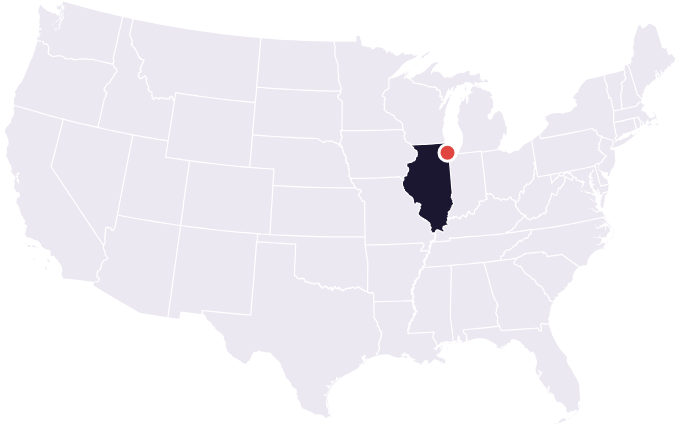
Red light: primary residence required outside buildings of 5 or more units
Chicago requires a short-term rental to be your primary residence in single-family homes and in buildings of 2 to 4 units.[1] Only buildings of 5 or more units skip that rule, and there no more than six units or one-quarter of the building, whichever is less, can be rentals.[2] Hosts must be natural persons, so an LLC can't register.[3]
Our verdict, based on the sources at the end of this guide.
Chicago regulates rentals of 31 days or fewer through shared housing registration or a vacation rental license.[6] In single-family homes and buildings of 2 to 4 units, the unit must be your primary residence.[1] Buildings of 5 or more units are the exception, capped at six units or one-quarter of the building, whichever is less.[2] Hosts must be natural persons, building owners can bar rentals, and neighbors can petition to close a precinct to new ones.[3, 9, 10] City taxes add up to 10.5%.[8]
Key requirements
Eligible units
Only a dwelling unit with six or fewer sleeping rooms qualifies.[1] It can't sit in a Restricted Residential Zone or on the Prohibited Buildings List,[2] and the code blocks new licenses in restricted zones unless the rental was a legal use before the zone took effect.[5]
Primary residence
In a single-family home, the unit must be your primary residence, and in a building of 2 to 4 units it must be your primary residence and the only rental in the building.[1] Primary residence means where you live at least 245 days a year.[4] Exceptions cover active military duty and rentals licensed before June 22, 2016, and the commissioner can grant a hardship adjustment after a 60-day review.[1, 5]
Larger buildings
Primary residence isn't required in these buildings.[2] No more than six units or one-quarter of the building's units, whichever is less, can be vacation rentals or shared housing in any combination.[5] A building owner or HOA can prohibit rentals outright, and the code makes your unit ineligible if they do.[1]
Who can hold it
A shared housing host can be an owner or a tenant, but must be a natural person, so an LLC can't register.[3, 4] A vacation rental license is for the owner, meaning someone with 25% or more of the unit.[5] If the unit is leased, the application needs an attestation that the building owner hasn't prohibited rentals.[5]
Registration and licenses
Register each shared housing unit in the city's portal for $125 a year, and post the registration number in every listing.[3, 6] A vacation rental license is $250 for 2 years and needs zoning review and inspections.[7] If you run several registered units, you also need a Shared Housing Unit Operator License, $250 for 2 years, held by a natural person.[6, 11]
Operational and safety standards
Insurance
Vacation rental licensees must carry commercial general liability insurance of at least $1,000,000 per occurrence and name the city as an additional insured.[5]
Listings and ads
Show your registration or license number in every ad and listing.[3, 5] For a vacation rental, leaving the number off creates a presumption that you're unlicensed.[5]
Guest rules
Occupancy can't exceed one person per 125 feet of floor area, and building code may set stricter limits.[12] You can't rent by the hour or for fewer than 10 consecutive hours, serve alcohol to guests or double-book.[12]
Safety and records
Keep working smoke alarms and carbon monoxide detectors, post an evacuation diagram and your local contact's details, and keep guest records for three years.[13]
Local contact
A vacation rental license needs a local contact person with a Chicago residence or office who can answer violations and take fixes.[5] Post their name and phone number at the entrance.[5]
Tax obligations
City taxes
Chicago charges a 4.5% hotel accommodations tax plus a 6% vacation rental and shared housing surcharge, 10.5% in all.[8] The surcharge took effect Dec 1, 2018, and payments are due on the 15th of each month.[8]
Who collects
On licensed platforms, the platform remits the city taxes.[6] On private platforms, you must set up your own tax account.[6]
State hotel tax
Illinois's Hotel Operators' Occupation Tax covers sleeping room rentals of fewer than 30 consecutive days, and the state collects the Chicago-area hotel taxes with it.[14] Hosting platforms that meet the re-renter definition have owed it since July 1, 2025,[15] and from July 1, 2026 platforms that meet the marketplace facilitator definition file for all rentals made through them.[14, 16] We didn't find a state page saying whether individual hosts owe it too, so ask the Department of Revenue.
Enforcement
No license
Operating a vacation rental without a license can cost $2,500 to $3,000 per day.[5] A property can't be licensed if a license for it was suspended or revoked for cause in the past 2 years.[5]
Ineligible listings
If you rent an ineligible unit, fines start at $500 to $1,000 within 14 days of notice and reach $5,000 per day at 28 or more days.[12] Failing to remove an ineligible listing costs $1,500 to $3,000 from day 8 and $2,500 to $5,000 per day from day 15.[1]
Suspension and revocation
The city can suspend or revoke a registration for three or more objectionable conditions, three or more illegal acts within 12 months, or a Scofflaw or Problem Landlord listing.[17] It can suspend without notice for up to 10 calendar days if there's an imminent threat to public health, safety or welfare.[17]
Restricted zones
Neighbors can petition to make a precinct a Restricted Residential Zone with signatures from at least 25% of its registered voters.[10] Zones last four years and renew by ordinance, and existing rentals can continue until the license expires or ownership changes.[10]
Prohibited buildings
Building owners, their agents or a condo board's registered agent can ask to put a building on the list, which bars rentals of 31 or fewer consecutive days across the whole property.[18] The city must publish the list.[9]
Bottom line for arbitrage
Skip Chicago unless you can hold a unit in a building of 5 or more units and the building owner has already said yes.
Step 1 is the hard part. We find landlords who already said yes →
Sources
Tell us your market. Our team calls landlords and sends you properties already approved for Airbnb.
- Landlord-approved listings
- New deals weekly
- Search any US market
More guides in this state
Browse all city guides →Rules tell you where. We find the landlord who says yes.
STR Exchange members get landlord-approved rentals, new deals every week and a team that searches their market.
- Landlord-approved listings
- New deals weekly
- Many markets