Kissimmee
Can you run an Airbnb or do rental arbitrage here? What the city requires: permits, taxes, safety rules and enforcement.
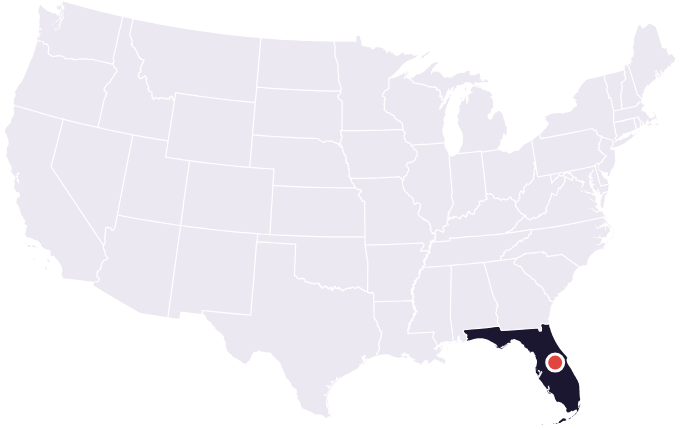
Red light: under 30 days is barred in residential zones, with two overlay exceptions
The city code prohibits renting a dwelling for less than 30 days in a residential district, with two exceptions.[1] They are a planned unit development approved for short-term or time-share use and a conditional use in a residential district, both inside the short-term rental overlay or approved before it existed and still in effect.[1] New short-term rental developments need at least two acres and 12 dwelling units.[1]
Our verdict, based on the sources at the end of this guide.
Kissimmee bars renting a dwelling for less than 30 days in a residential district, with two exceptions.[1] Both depend on the city's short-term rental overlay, or on an approval from before it that is still in effect.[1] New developments need at least two acres and 12 dwelling units.[1] The code also says applicable city, county and state licenses must be obtained.[1] Osceola County says it has no contract with Airbnb, Vrbo or other platforms, so owners and agents must collect its 6% tourist tax.[8]
Key requirements
Zoning check
Renting a dwelling for less than 30 days in a residential district is prohibited except in two cases.[1] One is a dwelling in a planned unit development (SRPUD or MUPUD) district inside the overlay that the city approved for short-term or time-share use.[1] The other is a conditional use in a residential district inside the overlay, and Table 4-1 lists it as conditional in RA-4, RB-1, RB-2, RC-1 and RC-2.[1, 9]
Overlay and older approvals
The overlay identifies areas where short-term rental developments may potentially be located, and they're allowed there only if Table 4-1 or the planned unit development section lists them as permitted or conditional.[9] The code says it doesn't intend to deny continued use of rentals that were previously approved, and legally existing ones fall under its nonconforming use rules.[9] A rental must also use a housing type the underlying district allows and meet that district's standards.[9]
New project standards
A new short-term rental development needs at least two acres and 12 dwelling units, and direct access to a collector or arterial road.[1] It also needs a buffer at least 15 feet wide with dense vegetation or a wall at least six feet high, and a property owners' association.[1] The code lets the DRC waive the buffer size when the project borders a non-residential district.[1]
Conversions
Converting existing dwellings to short-term rentals can't be approved unless at least 80 percent of the owners accept it, or a stricter share if the property's own rules require one.[1] The code gives association documents as an example of those rules.[1]
Business tax receipt
The city says you must pay a tax to operate any business within city limits.[3] A business in the city needs both a city receipt and an Osceola County receipt, and the county requires proof of payment.[3] The code also says applicable city, county and state licenses shall be obtained.[1]
Operational and safety standards
City or county
An address can say Kissimmee but sit in unincorporated Osceola County, where the county handles business tax receipts.[3] The county's code permits short-term rental there in the Planned Development zoning district, inside its Short-Term Rental Overlay.[10] The county's page tells you to check its overlay map and says its Zoning office can answer questions.[11]
State license
A state vacation rental license is needed if you rent an entire unit more than three times in a calendar year for periods of less than 30 days or 1 calendar month, whichever is less.[12] Renting only individual rooms doesn't need one.[12] A single unit costs $170 for a full year, plus a $50 application fee for new applications.[2]
County business tax receipt
Osceola County tells you to register a Local Business Tax Receipt with the Tax Collector, and you need your state license number to apply.[11, 13] City receipts expire every Sept 30 and renew yearly.[3]
Inspection and display
The city's steps are an online application, staff review, an inspection by the Kissimmee Fire Department, and displaying the receipt.[3] The state requires the license to be displayed conspicuously and smoke detectors in all units.[12]
Tax obligations
State sales tax
Florida charges a 6% sales tax on rentals of living or sleeping accommodations for six months or less.[4] Sales tax and any surtax on transient rentals are reported to the Florida Department of Revenue.[4] The state's Oct 1, 2025 repeal of sales tax on commercial rent left transient rentals taxable.[14]
County surtax and tourist tax
Osceola County's discretionary sales surtax is 1.5%.[5] Its tourist development tax is 6% on rentals of six months or less, in addition to state sales tax and any surtax.[6] The county's tax page says the 6% tax has applied since July 1, 2004.[8]
Who collects
Osceola County says it is not contracted with Airbnb, Vrbo, Evolve or any other third-party booking platform.[8] It says property owners and agents must collect and remit the 6% tourist tax.[8] Mandatory separately stated charges, such as cleaning and resort fees, are taxable, and credit card fees can't be deducted.[8]
Filing and penalties
A return postmarked after the 20th of the month it's due carries a penalty of 10% of the tax or $50, whichever is greater.[15] A late return with no tax due carries a $50 penalty.[15] A return postmarked by the 20th earns a 2.5% collection allowance, capped at $30.[15]
Records and audits
The county's compliance page covers audits and says to keep records for three years.[16] The guest register must follow section 509.101(2) of the Florida Statutes.[8]
Enforcement
Special magistrate
The city enforces its codes through a special magistrate under Florida law.[17] The magistrate can hear violations of all city codes and ordinances and issue orders to bring a violation into compliance.[17]
Noncompliance and liens
If you don't comply by the date in a magistrate's order, the city issues an affidavit of noncompliance.[17] After a hearing, the magistrate may enter an order imposing a lien.[17] If the city prevails, it recovers its enforcement costs, and those costs can be added to the lien.[17]
Fine limits
Kissimmee's enforcement chapter states no dollar amount.[17] Fines under Florida's code enforcement statute are capped at $250 a day for a first violation, $500 a day for a repeat violation and $5,000 for an irreparable one.[18] A city of 50,000 or more people can adopt higher caps of up to $1,000, $5,000 and $15,000 by a majority-plus-one vote.[18]
State law
Florida law bars local rules that prohibit vacation rentals or regulate how long or how often they're rented.[19] That doesn't apply to local rules adopted on or before June 1, 2011.[19] The code history for Kissimmee's short-term rental section lists an ordinance from 1994 and an amendment on Aug 4, 2020.[1]
Bottom line for arbitrage
Skip Kissimmee unless the unit sits inside the short-term rental overlay or already has an approval that's still in effect. Confirm that with the city before you pay anyone anything.
Step 1 is the hard part. We find landlords who already said yes →
Sources
Tell us your market. Our team calls landlords and sends you properties already approved for Airbnb.
- Landlord-approved listings
- New deals weekly
- Search any US market
More guides in this state
Browse all city guides →Rules tell you where. We find the landlord who says yes.
STR Exchange members get landlord-approved rentals, new deals every week and a team that searches their market.
- Landlord-approved listings
- New deals weekly
- Many markets