Miami
Can you run an Airbnb or do rental arbitrage here? What the city requires: permits, taxes, safety rules and enforcement.
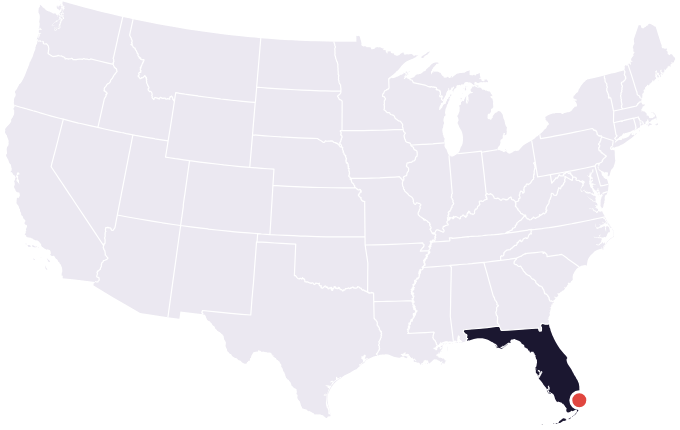
Red light: only buildings approved for lodging can run short-term rentals
The City of Miami runs short-term rental as a lodging conversion: the building goes through plan review, inspections and a new certificate of occupancy before units can operate.[1] Single-family homes and duplexes in T3 and T4-R zones are generally ineligible,[1] and converting more than 25% of a building's units triggers a change of occupancy for the whole building.[1]
Our verdict, based on the sources at the end of this guide.
The City of Miami handles short-term rental as a lodging conversion, with plan review, inspections and a new certificate of occupancy.[1] Units in a converted building then need a state license and a city certificate of use.[1] The condo or homeowner association must sign off,[8] and one operator must run every unit.[2] Houses and duplexes in T3 and T4-R zones are generally ineligible.[1]
Key requirements
Zoning check
Single-family and duplex structures in T3 and T4-R transect zones are generally ineligible for short-term rental/lodging use.[1] Other zones may be eligible, so check the city's zoning map or ask the Zoning Department.[1]
Lodging conversion
The city defines short-term rental/lodging as a room or group of rooms, each with its own bathroom and full kitchen, rented to transients day to day, week to week or month to month.[1] To convert, you apply for a building permit, pass plan review and inspections, and get a new certificate of occupancy.[1] If more than 25% of a building's units convert, the whole building changes occupancy under state law.[1]
Association sign-off
You and your condo or homeowner association both sign the city's evaluation form, and the association's governing documents must allow short-term rental.[8] You also upload your active certificate of use and certificate of occupancy.[8]
Certificate of use
After the certificate of occupancy and the state license, you apply for a new city certificate of use.[1] The application fee is $50, and a certificate lasts until Sept 30 of the fiscal year you applied in.[3] You must renew it every year, or the city revokes your authority to operate.[1]
State law
Florida law bars local rules that prohibit vacation rentals or regulate how long or how often they're rented.[9] That doesn't apply to local rules adopted on or before June 1, 2011.[9]
Operational and safety standards
Operational plan
Every building needs an operational management plan signed by the association, covering front desk operations, a 24-hour contact, guest access control and housekeeping.[1] One operator must manage all short-term units in the building.[2]
Staff contact
A dedicated staff member must be reachable 24 hours a day, 7 days a week, including holidays, for guest issues, emergencies and city inquiries.[2]
Guest registration
Register and confirm every guest before they stay, and record photo ID and length of stay.[2] The plan must describe the check-in method, where registration happens and how access is controlled.[2]
State license
Get a state DBPR lodging license.[1] The city needs a copy to finalize your certificate of use.[1] The state's vacation rental guide says a license is needed if you rent an entire unit more than three times in a calendar year for periods of less than 30 days or 1 calendar month, whichever is less.[4]
Business tax receipts
Get a city business tax receipt and a separate Miami-Dade County local business tax receipt.[10]
Tax obligations
State sales tax
Florida charges a 6% sales tax on transient rentals.[5] Miami-Dade adds a 1% discretionary sales surtax.[6] Sales tax on transient rentals is reported to the Florida Department of Revenue.[5]
County tourist taxes
Miami-Dade charges a 3% convention development tax, a 2% tourist development room tax and a 1% professional sports facilities tax.[7] That's 6% for the county, which matches the state's local option rate table.[11]
County registration
Owners who rent for six months or less must register with the county.[7] You don't have to if you rent only through a platform that is registered with the county to collect and remit the tax.[7]
Miami Beach is separate
Miami Beach has its own local option rate of 7%, separate from the county rate.[11] The county's 2% and 1% taxes don't apply there.[7]
Enforcement
Unlawful rentals
A code board report says a certificate of use that allows only residential occupancy doesn't permit transient lodging, unless the building gets a different certificate and certificate of occupancy.[12]
Fines
A Feb 26, 2025 meeting report says the city's code enforcement board ordered one-time fines of $2,500 to $50,000, plus $1,000 a day, against units in one building for unlawful short-term rentals.[12]
Renewal and audits
If you don't renew your certificate of use, the city revokes your authority to run short-term rental/lodging units.[1] The association must also keep a log of approved units, and the city reserves the right to audit it.[8]
Bottom line for arbitrage
Skip Miami unless the building is already approved for lodging. Ask for the paperwork before you sign anything.
Step 1 is the hard part. We find landlords who already said yes →
Sources
Tell us your market. Our team calls landlords and sends you properties already approved for Airbnb.
- Landlord-approved listings
- New deals weekly
- Search any US market
More guides in this state
Browse all city guides →Rules tell you where. We find the landlord who says yes.
STR Exchange members get landlord-approved rentals, new deals every week and a team that searches their market.
- Landlord-approved listings
- New deals weekly
- Many markets