Morrisville
Can you run an Airbnb or do rental arbitrage here? What the city requires: permits, taxes, safety rules and enforcement.
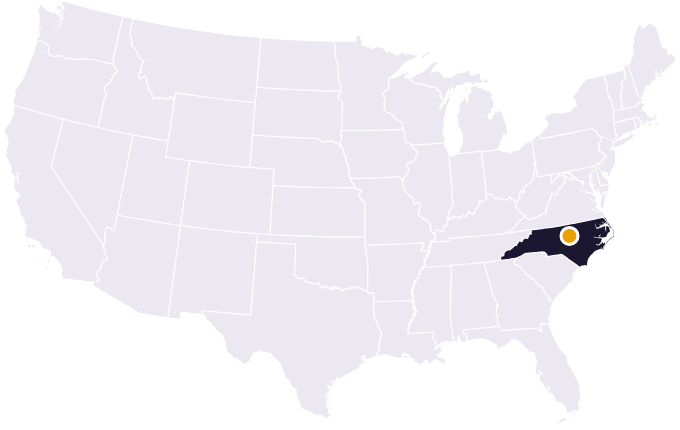
Yellow light: no short-term rental rules found, so get zoning confirmed first
We found no Morrisville rule that names short-term rentals as of Oct 6, 2026.[1] The UDO's use table lists bed and breakfast and hotel/motel as accommodation uses and no short-term rental use, and a blank cell in that table means the use is prohibited.[1] Get a written zoning answer from the Town on the exact address before you sign.
Our verdict, based on the sources at the end of this guide.
We found no Morrisville rule that names short-term rentals as of Oct 6, 2026.[1] The UDO's use table lists bed and breakfast and hotel/motel as accommodation uses and no short-term rental use.[1] It describes visitor accommodation as lodging for stays of typically less than 30 days,[7] and household living as tenancy generally arranged month-to-month or longer.[6] An unlisted use is allowed in a district only if the Planning Director finds it so similar to a listed use that it should be allowed the same way.[2]
Key requirements
No named permit
We found no Morrisville permit or registration for short-term rentals.[3] The Town's permits page names permits for special events, signs, food trucks and home businesses, and none for short-term rentals.[3]
Use table
The UDO's use table lists bed and breakfast and hotel/motel under accommodation uses, and no short-term rental use.[1] A blank cell means the use is prohibited in that district.[1]
Short stays
The UDO describes visitor accommodation as lodging for short-term stays of typically less than 30 days, with hotels/motels and bed and breakfasts as examples.[7] It describes household living as tenancy generally arranged on a month-to-month or longer basis.[6]
Bed and breakfast
The UDO defines a bed and breakfast as a residence renting one or more sleeping rooms for periods of less than one week and serving guests breakfast.[8] We found no definition of short-term rental in the UDO's defined terms.[9]
Unlisted uses
The Planning Director can treat an unlisted principal use as allowed in a district only after finding it so similar to a listed use allowed there that it should be allowed the same way.[2] Ask the Town's planning staff for that answer in writing for your address.
Operational and safety standards
State vacation rental law
North Carolina's Vacation Rental Act covers rentals of residential property for fewer than 90 days to a guest who has a permanent home elsewhere.[10] It binds landlords and real estate brokers, who need a written rental agreement with the Act's notice and can't pay out more than 50% of the rent before the guest arrives.[10]
Events and signs
The Town requires permits for special events and for signs.[3] Violations of the special event permit rules carry a $100 civil penalty for a first offense and $200 for a repeat.[11]
Tax obligations
Sales tax
North Carolina taxes the gross receipts from renting an accommodation at the general state rate.[12] The state's rate table lists 7.25% for Wake County, which includes the 0.50% transit tax.[4] A 2017 state notice says that is a 4.75% state rate, a 2.00% county rate and the 0.50% transit rate.[13]
Room occupancy tax
Wake County charges a 6% room occupancy tax on gross receipts from renting a room, lodging or accommodation.[5] The county says its ordinance also covers rooms or houses that individuals rent through booking websites.[5]
Total rate
For a property in Wake County, adding the 7.25% sales tax and the 6% occupancy tax, we get 13.25%.[4, 5]
Who collects
For the state tax, the retailer who collects the payment for the rental owes it, and that can be the accommodation provider or an accommodation facilitator.[12] For the county tax, retailers must open an account with the county and file by the 20th of the next month, even if nothing is due.[5]
Stays of 90 days or more
The state sales tax doesn't apply to an accommodation supplied to the same person for 90 or more continuous days.[12] Wake County exempts rentals to the same person for 90 or more consecutive days from its occupancy tax too.[5]
Enforcement
Zoning complaints
The Town's permits page points people with zoning concerns to its online Concern Reporter Center.[3]
Fixing a violation
After a notice of violation, the Town can order the violation fixed, or an administrative hearing requested, within a set time that can't exceed 30 days.[14] It may grant one extension of up to 90 days for good cause.[14]
Civil penalties
Most violations of the UDO, other than riparian buffer, stormwater and tree rules, carry $50 per violation for the first day and $100 per violation for each day after, and each day is a separate offense.[15] The Town gives violators 30 calendar days to pay or ask for an administrative hearing.[15]
State bill
A 2025 bill titled Regulation of Short-Term Rentals, Senate Bill 291, was referred to the Senate Rules and Operations Committee on Mar 17, 2025.[16] The General Assembly's history shows no later action.[16]
Bottom line for arbitrage
Don't sign for short-term use in Morrisville until the Town confirms your address in writing.
Step 1 is the hard part. We find landlords who already said yes →
Sources
Tell us your market. Our team calls landlords and sends you properties already approved for Airbnb.
- Landlord-approved listings
- New deals weekly
- Search any US market
More guides in this state
Browse all city guides →Rules tell you where. We find the landlord who says yes.
STR Exchange members get landlord-approved rentals, new deals every week and a team that searches their market.
- Landlord-approved listings
- New deals weekly
- Many markets