Nashville
Can you run an Airbnb or do rental arbitrage here? What the city requires: permits, taxes, safety rules and enforcement.
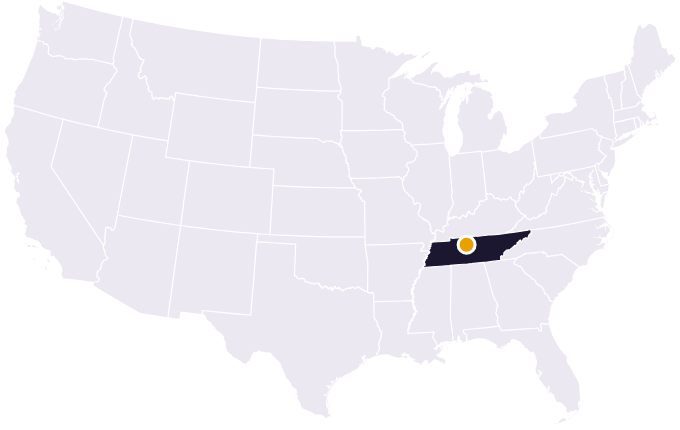
Yellow light: new non-owner permits only in a short list of zones
Metro Nashville issues new permits for rentals the owner doesn't live in only in listed districts, and not at all in AR2A, R, RS or RM zones.[1] Each permit costs $313,[2] and running a rental without one means a $50 fine for every day plus a one-year wait.[3] You can check an address before you apply.[4]
Our verdict, based on the sources at the end of this guide.
Nashville allows rentals the owner doesn't live in only in a short list of mostly mixed-use, office and commercial districts, and bars new ones in AR2A, R, RS and RM zones.[1] The property owner must hold the permit, which costs $313 a year.[2, 3] A new permit also isn't issued within 100 feet of a school, park, religious institution or licensed day care.[3] Run a rental without a permit and you face a $50 fine for each day and a one-year wait.[3]
Key requirements
Zoning check
New permits for rentals the owner doesn't live in are issued only in a short list of districts, mostly mixed-use, office and commercial ones plus downtown.[1] They aren't allowed in AR2A, R, RS or RM zones.[1] Existing permit holders there may renew, but those permits can't be transferred if the property is sold or transferred.[1]
Owner permit
The property owner must get the permit before anyone lists or advertises the rental, and the owner on the application must match the deed.[1, 3] A permit can't be transferred to another person, entity or address, and a change in ownership voids it.[3]
Application papers
Send proof of at least $1 million in liability coverage per occurrence, proof you notified each adjacent owner, and a statement that no HOA, lease or other agreement bars the rental.[3] The checklist also asks for a notarized affidavit and a floor plan.[9] An application expires after 90 days if it isn't completed.[3]
Distance rule
No new permit is issued for a location less than 100 feet from a religious institution, a school or its playground, a park, or a licensed day care center or its playground.[3] The Metro Council can waive this with 21 affirmative votes after a public hearing.[3]
Renewal
A permit expires 365 days after it's issued unless you renew it first.[3] Renewal is $313 plus proof of insurance and of your occupancy tax payments, and the permit isn't renewed until you pay.[2, 10]
Operational and safety standards
Listing and guest rules
Show the permit number on every online listing, or include a legible image of the permit.[3] Guests must stay at least 24 hours and no more than 30 consecutive days, and the renter must be at least 21.[3] Occupancy can't pass twice the number of sleeping rooms plus four, and you can't rent to more than one party at a time.[3]
Local contact
Name a responsible person or business within 25 miles who handles maintenance and safety concerns.[3] That contact must answer calls 24/7 during each rental, and their name and phone number must be posted in the unit.[3]
Safety
Install UL 217 smoke alarms in all sleeping areas, in each story and along the exit path from the sleeping area.[3] Multifamily buildings with three or more dwellings also need a Fire Marshal inspection.[9]
House rules
Don't prepare or serve food to guests, and keep recreational vehicles, buses and trailers off the street and property.[3] Guests must follow Metro's noise and waste rules.[3]
Tax obligations
Sales tax
Every rental is subject to the 7% state sales tax and the local sales tax.[5] Davidson County's local rate rose to 2.75% on Feb 1, 2025.[6] Returns and payments are due monthly by the 20th.[5]
Metro occupancy tax
Metro's local occupancy tax is 7%, effective July 1, 2023.[7] The permit holder must collect and remit the room, occupancy and sales taxes, and renewals need proof you paid them.[3] Occupancy tax returns are due by the 20th of each month.[8]
Booking platforms
A marketplace that meets the state's sales threshold collects and remits sales tax as the seller.[5] Since Jan 1, 2021, short-term rental marketplaces also remit the occupancy tax to the state.[5]
Enforcement
No permit
Operating without a permit is a $50 fine for each day of operation.[3] The property then can't get a permit for one year after the city finds it operated without one, or six months if it let a permit lapse.[3] A court finding adds a three-year wait.[3]
Revocation
The city can revoke a permit if it finds three violations of generally applicable Metro laws caused by the rental, after 15 days' written notice.[3] After a revocation, the same property can't get a new permit for one year.[3] You can appeal to the short term rental appeals board.[3]
Complaints
Neighbors can file complaints online or call 615-862-6500.[11] The city tells the permit holder about each complaint.[3] A rental with documented complaints gets no grace period to renew late.[3]
State and local law
Metro's current short term rental ordinance took effect Nov 12, 2024.[12] Tennessee's Short-Term Rental Unit Act lets local governments run a permit process,[13] and HOAs can be more restrictive than Metro.[2]
Bottom line for arbitrage
Workable only in an eligible zone. Run the landlord's address through the city's viewer before you pay anyone anything.
Step 1 is the hard part. We find landlords who already said yes →
Sources
Tell us your market. Our team calls landlords and sends you properties already approved for Airbnb.
- Landlord-approved listings
- New deals weekly
- Search any US market
More guides in this state
Browse all city guides →Rules tell you where. We find the landlord who says yes.
STR Exchange members get landlord-approved rentals, new deals every week and a team that searches their market.
- Landlord-approved listings
- New deals weekly
- Many markets