Raleigh
Can you run an Airbnb or do rental arbitrage here? What the city requires: permits, taxes, safety rules and enforcement.
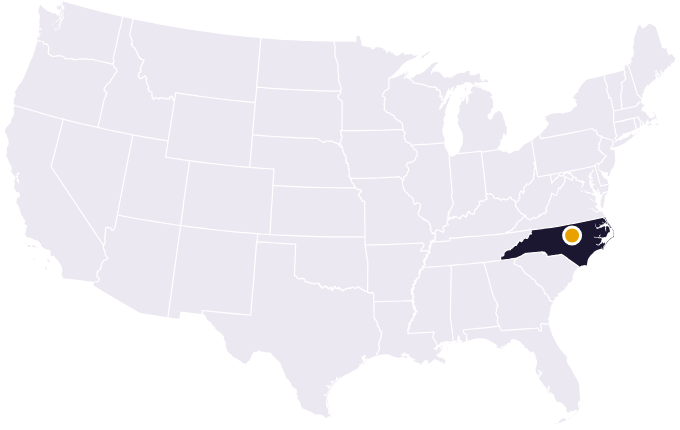
Yellow light: allowed with a zoning permit, but units per building are capped
Raleigh allows short-term rentals as a limited use in its residential districts and in its RX, OX, NX, CX and DX districts.[1] You need a zoning permit first,[1] and in a multi-unit building no more than 25% of the units, or two, whichever is greater, can be short-term rentals.[2] Two verified violations within 365 days get the permit revoked.[2]
Our verdict, based on the sources at the end of this guide.
Raleigh allows short-term rentals as a limited use in its residential districts and in its RX, OX, NX, CX and DX districts.[1] The operator needs a zoning permit,[1, 2] and the legal owners must sign a notarized affidavit for every application.[3, 4] In a multi-unit building, no more than 25% of the units, or two, whichever is greater, can be short-term rentals.[2] Two verified violations within 365 days get the permit revoked, and the property can't get a new one for 365 days.[2]
Key requirements
Zoning check
Short-term rentals are a limited use in the R-1, R-2, R-4, R-6, R-10, RX, OX, NX, CX and DX districts.[1] The city's use table shows them as not permitted in the OP, IX, CM, AP, IH and MH districts.[7] Check your zoning in the city's iMaps tool before you sign.[1]
Zoning permit
Every short-term rental operator must first apply for and get a zoning permit from the city.[1, 2] Submit the whole application packet as one PDF through the city's Permit and Development Portal.[1] Use a separate application for each unit.[3]
Owner's affidavit
Every application needs a signed Owner's Affidavit.[3] The legal owners swear before a notary that they own the property, and they name the representative or agent who may request the permit for them.[4] The application form also has a line for an applicant who isn't the owner.[3]
Per-building cap
In a multi-unit building, no more than 25%, or two dwelling units, whichever is greater, can be short-term rentals.[2] For multi-unit dwellings the application asks for building layouts with the units labeled, and detached accessory dwelling units need a floor plan.[3]
Operational and safety standards
Kitchens
Cooking facilities aren't allowed in any bedroom, except in a one-room studio rental.[2] The code counts as cooking facilities any refrigerator over seven cubic feet, any 220-volt electric stovetop range, any natural gas appliance and any cooktop with more than two burners.[2]
Events and ads
In residential districts, renters can't use the premises for special events or gatherings.[2] No exterior advertising is allowed.[2]
Permit number and records
Post the zoning permit number on every advertisement for the rental and on the property.[2] Keep a list of every short-term rental lodger who stays at the property for three years.[2]
Safety and other uses
Follow state and local laws on fire and building codes, smoke and carbon monoxide detectors and housing codes.[2] The premises can't also be used as Live-Work or Day Care, Home.[2]
State vacation rental law
North Carolina's Vacation Rental Act covers rentals of residential property for fewer than 90 days to a guest who has a permanent home elsewhere.[8] It binds landlords and real estate brokers, who need a written rental agreement with the Act's notice and can't pay out more than 50% of the rent before the guest arrives.[8]
Tax obligations
Sales tax
North Carolina taxes the gross receipts from renting an accommodation at the general state rate.[9] The state's rate table lists 7.25% for Wake County, which includes the 0.50% transit tax.[5] A 2017 state notice says that is a 4.75% state rate, a 2.00% county rate and the 0.50% transit rate.[10]
Room occupancy tax
Wake County charges a 6% room occupancy tax on gross receipts from renting a room, lodging or accommodation.[6] The county says its ordinance also covers rooms or houses that individuals rent through booking websites.[6]
Total rate
Adding the 7.25% sales tax and the 6% occupancy tax, we get 13.25%.[5, 6]
Who collects
For the state tax, the retailer who collects the payment for the rental owes it, and that can be the accommodation provider or an accommodation facilitator.[9] For the county tax, retailers must open an account with the county and file by the 20th of the next month, even if nothing is due.[6]
Stays of 90 days or more
The state sales tax doesn't apply to an accommodation supplied to the same person for 90 or more continuous days.[9] Wake County exempts rentals to the same person for 90 or more consecutive days from its occupancy tax too.[6]
Enforcement
Revocation
The city must revoke the permit after a written finding that a resident, resident manager or operator had two or more verified violations within 365 days, or a listed criminal conviction on the premises.[2] After a revocation, the premises can't get a new or reinstated permit for 365 days.[2]
Verified violations
A verified violation is a finding by a code enforcement official, police officer or judge, after notice and a chance to respond, with an order that imposes a sanction or requires a fix.[2] Violations of any City Code zoning rule, any noise rule or any nuisance barred by City Code section 12-6002 at the rental count.[2]
Civil penalties
Violations of the short-term rental standards carry the civil penalties in section 10.4.2 of the UDO.[2] That section sets $100 per violation unless the UDO sets a higher amount, and $500 per day of continuing violation after written notice and a deadline.[11]
State bill
A 2025 bill titled Regulation of Short-Term Rentals, Senate Bill 291, was referred to the Senate Rules and Operations Committee on Mar 17, 2025.[12] The General Assembly's history shows no later action.[12]
Bottom line for arbitrage
You can run it here, but plan around the building cap and get the owner to sign the affidavit.
Step 1 is the hard part. We find landlords who already said yes →
Sources
Tell us your market. Our team calls landlords and sends you properties already approved for Airbnb.
- Landlord-approved listings
- New deals weekly
- Search any US market
More guides in this state
Browse all city guides →Rules tell you where. We find the landlord who says yes.
STR Exchange members get landlord-approved rentals, new deals every week and a team that searches their market.
- Landlord-approved listings
- New deals weekly
- Many markets