San Francisco
Can you run an Airbnb or do rental arbitrage here? What the city requires: permits, taxes, safety rules and enforcement.
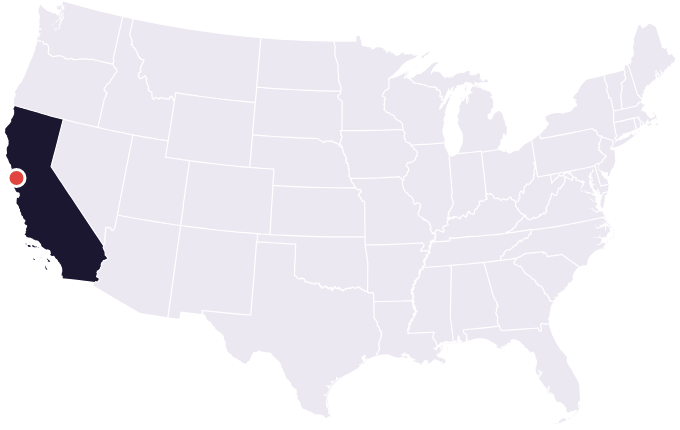
Red light: only a permanent resident can host, in the home they live in
San Francisco allows short-term rentals only from a home where you are a permanent resident and plan to live at least 275 nights a year,[1] so you can't sublet a unit you don't live in. Rentals while you're away are capped at 90 nights a year,[2] and a notice of violation can carry penalties of $484 per day for each unit.[2]
Our verdict, based on the sources at the end of this guide.
San Francisco lets you host only in the home where you are a permanent resident, and you must plan to live there at least 275 nights a year.[1] You can be the owner or a tenant, but you can offer only that one unit.[1] Rentals of the whole unit while you're away are capped at 90 nights a year.[2] The application fee is $925 and an approval lasts two years.[1, 2] A notice of violation can carry penalties of $484 per day.[2]
Key requirements
Residency test
Be a permanent resident of San Francisco and have lived in the unit at least 60 days before you apply.[1] You must plan to live there at least 275 nights each calendar year.[1] Show two residency documents, such as a driver's license, a voter registration or one utility bill.[2]
Owner or tenant
You must own the unit or be its tenant.[1] If you rent, the Office of Short-Term Rentals sends a notice to the owner,[1] and the city says it won't enforce private agreements such as leases.[2] In a rent-controlled unit, you can charge no more rent than the rent you pay your landlord per month.[1, 4]
Business registration
Register with the Treasurer & Tax Collector first, pick the industry "Accommodations" and get a Business Account Number.[5] Then apply to the Office of Short-Term Rentals.[1] You can list on a hosting platform once your application is submitted.[1]
Fee and term
The application fee is $925[2] and is non-refundable.[5] An approval is good for two years, and the office emails you about renewal within one month before it expires.[1, 6] Your business registration renews every May 31.[5]
Eligible units
You can offer only the unit where you live, and an owner of a multi-unit building can offer one unit in it.[1, 2] Ineligible units include income-restricted affordable housing, boats, RVs and anything in Treasure Island, Fort Mason or the Presidio.[2] Accessory dwelling units can be listed only for stays of 30 days or longer per guest.[2]
Clean record
The city won't register a unit with outstanding building, fire, health, housing, police or planning code enforcement, and it suspends the registration if a violation occurs later.[4]
Operational and safety standards
Night limits
While you're away, you can rent the whole unit up to 90 nights per calendar year.[2] The 90-night limit covers un-hosted stays, when you're not in the unit overnight with your guests.[2] You can't host more than five distinct renters at the same time.[1]
Insurance
Carry property liability insurance of at least $500,000.[4, 5]
Listing number
Put the unique record number from your application on every listing, since the city says a missing number may get the listing removed.[1] Once you're approved, use your certificate number.[2] No exterior signage is allowed.[6]
Records
Keep records for two years showing the days you lived in the unit and the days you rented it, and give them to the city on request.[4]
Separate listings
If you offer both hosted and un-hosted stays, create a separate listing for each.[2]
Quarterly reports
Report the nights you rented, hosted and un-hosted, for each three-month period, no later than one month after it ends, even if you had no stays.[6] The next deadline is Oct 31, 2026.[7]
Tax obligations
Transient occupancy tax
San Francisco imposes a 14% transient occupancy tax on rentals of less than 30 days.[3] The tax is collected by hotel operators and short-term rental hosts and sites, then remitted to the city.[3]
District assessment
Short-term rental hosts also pay a Tourism Improvement District assessment on gross revenue, and the Treasurer's TOT page lists 2.25% for Zone 1 and 2.00% for Zone 2.[3] An older Treasurer notice to hosts puts Zone 1 on or east of Van Ness Avenue,[8] and the Treasurer's page says hotels and hosts may pass the assessment on to guests as a separate item.[3]
Booking platforms
Qualified website companies, which the Treasurer lists as Airbnb, Interval International and misterb&b, can collect and remit the tax for hosts.[3] Hosts who do business only through these companies don't have to file TOT or TID returns.[3]
Your own filings
Hosts file an annual transient occupancy tax return, due the last day of January.[3] You also file Form 571-STR with the Assessor-Recorder and report your business personal property, which may be taxed.[5]
Enforcement
Penalties
A notice of violation can be issued with penalties of $484 per day, per unit.[2] The code sets the initial administrative penalty at not more than four times the $121 hourly administrative rate for each unit per day, until the unlawful activity ends.[4] In a civil case the city wins, penalties can reach $1,000 per day.[4]
Repeat violations
The city says penalties start when the notice is issued and continue until the violation is fully abated.[6] Repeat violations can bring escalated penalties and a referral to the City Attorney's Office.[6]
Good standing
Offering a unit while not in good standing on the registry, including advertising it, counts as an unlawful conversion under the code.[4]
Appeals
If your application is rejected, or your certificate is suspended or revoked, you can file a written appeal within 30 calendar days of the notice.[2]
Complaints
Anyone can report a rental with the office's complaint form.[9] The office lists a host who operates without approval, or who doesn't appear to live on site, as examples of non-compliance.[9]
Staying certified
Certification requires you to keep complying with the law for the whole two years, and you renew every two years.[6]
Bottom line for arbitrage
Skip San Francisco for rental arbitrage. The city registers only the home you actually live in.
Step 1 is the hard part. We find landlords who already said yes →
Sources
Tell us your market. Our team calls landlords and sends you properties already approved for Airbnb.
- Landlord-approved listings
- New deals weekly
- Search any US market
More guides in this state
Browse all city guides →Rules tell you where. We find the landlord who says yes.
STR Exchange members get landlord-approved rentals, new deals every week and a team that searches their market.
- Landlord-approved listings
- New deals weekly
- Many markets