Silver Spring
Can you run an Airbnb or do rental arbitrage here? What the city requires: permits, taxes, safety rules and enforcement.
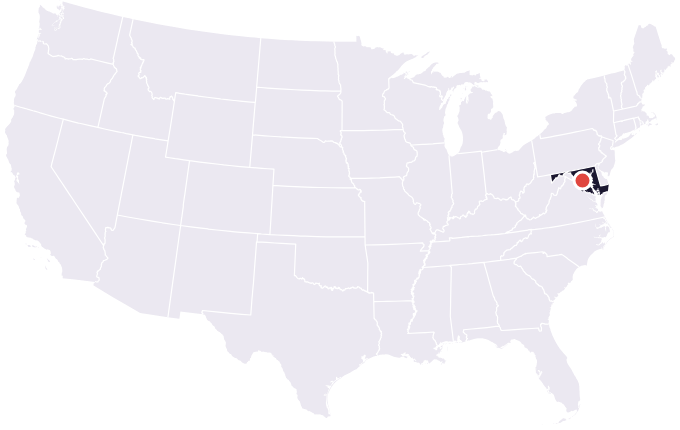
Red light: only the owner's own primary residence can be an STR
Silver Spring is unincorporated Montgomery County, so the county's short-term rental law applies. The rental must be the primary residence of the owner or an owner-authorized resident or agent.[1, 2] When no owner or resident is present, it can be rented at most 120 days a year.[1] A license costs $500.[3]
Our verdict, based on the sources at the end of this guide.
Silver Spring is unincorporated Montgomery County, so the county's short-term rental law applies here.[3] The rental must be the primary residence of the owner or an owner-authorized resident, so a tenant who lives elsewhere can't run one.[1, 2] When no owner or resident is present, you can rent it at most 120 days a year.[1] A license costs $500, and the county decides 30 to 60 days after you apply.[3] Cities and towns the county lists follow their own rules.[7]
Key requirements
Primary residence
The unit must be the applicant's primary residence, and the applicant must be the owner or an owner-authorized agent.[2] Zoning says the same for the owner or an owner-authorized resident, whatever the dwelling type.[1] Proof of primary residence means living there at least 183 days of each calendar year.[8]
Where it can't be done
A Farm Tenant Dwelling or a site with an accessory dwelling unit can't host one.[1] The county also says an accessory dwelling unit can't be run as a short-term rental.[7]
If you lease the home
If you lease and don't live there, you can't hold the license.[2] The owner or an owner-authorized resident holds it instead, and you could manage the rental under a written agreement with them.[1] Managing a rental for an owner for pay may need a Maryland real estate license, because the state's license law counts collecting rent for another person as brokerage services.[9]
Landlord, HOA and neighbors
The application can't be prohibited by an HOA, condo document or lease.[2, 7] Neighbors, the municipality, the HOA and the owner (when the applicant isn't the owner) are notified.[2]
How to apply
First get an 8-digit Maryland Central Registration Number from the Comptroller and register for the county Room Rental-Transient Tax.[4] Then apply through an AccessMCG account.[4] The county approves or denies 30 to 60 days after you apply.[3]
Operational and safety standards
Guest limits
Allow no more than 6 overnight guests aged 18 or older and no more than 2 per bedroom.[1, 2]
Local representative
Name a designated representative over 18 who lives within 15 miles.[2, 8]
Listings
Show the license number in your online listings.[2]
Parking
Provide one off-street parking space per rental contract, unless the listing says parking is prohibited.[1]
Safety and inspection
From Oct 1, 2026, operators must post an evacuation diagram and emergency numbers, provide a working fire extinguisher and install working smoke and carbon monoxide alarms.[10] Counties must require annual inspection by local law on or before July 1, 2028.[10] The county director may inspect a licensed unit.[11]
Tax obligations
County room tax
The Room Rental-Transient Tax is 7%, effective after 12:00 a.m. on July 1, 2026.[5] The tax is 7% of the total room rental collected, including fees a broker charges.[6]
Who is liable
The provider is liable for the tax even when booking through a broker, unless the broker proves it remits the tax to the county.[6]
Returns and penalties
Returns are monthly and due by the last day of the following month, and quarterly filing is possible if approved.[5] A return is required even if no tax is due.[6] The penalty is 5% per month up to 25%, plus 1% monthly interest.[5]
Longer stays
Stays of more than 30 consecutive days are exempt.[5]
Booking platforms
Maryland Chapter 638 (SB 979) has accommodations intermediaries remit hotel rental tax to the Comptroller instead of counties, effective July 1, 2027.[12] The thresholds are $100,000 in bookings or 200 or more transactions.[13]
Enforcement
No license
An unlicensed property must stop advertising and cancel reservations.[7]
Suspension and revocation
The county can suspend or revoke a license and issues notices of violation and civil citations.[3] Denial grounds include falsified information.[8]
Three-year bar
After a revocation, the former licensee, household members or the same dwelling unit can't get a license for 3 years.[11] A license also requires no violation of Chapter 54 in the past 36 months.[2]
Challenges and appeals
A resident or owner within 300 feet, the municipality, the HOA or the owner can file a challenge within 30 days.[11] You can appeal a decision to the Board of Appeals within 30 days.[7]
Pending state bill
HB 993 would bar local bans on short-term rentals solely because the operator is a lessee or sublessee, with one rental per operator allowed.[14] Its last recorded action is a Senate second reading on 4/13/2026, so it has not passed.[14]
Bottom line for arbitrage
Skip Silver Spring unless you live in the home or partner with an owner who does. A lease you don't live in doesn't fit this law.
Step 1 is the hard part. We find landlords who already said yes →
Sources
Tell us your market. Our team calls landlords and sends you properties already approved for Airbnb.
- Landlord-approved listings
- New deals weekly
- Search any US market
More guides in this state
Browse all city guides →Rules tell you where. We find the landlord who says yes.
STR Exchange members get landlord-approved rentals, new deals every week and a team that searches their market.
- Landlord-approved listings
- New deals weekly
- Many markets