Beech Mountain
Can you run an Airbnb or do rental arbitrage here? What the city requires: permits, taxes, safety rules and enforcement.
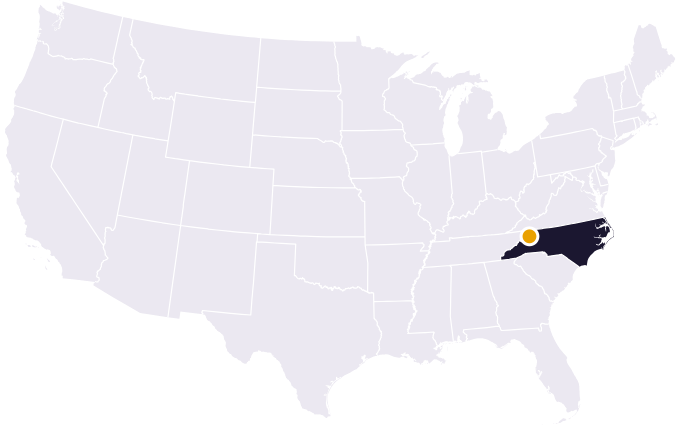
Yellow light: no permit or cap, but zone R-3B bars vacation rentals
Beech Mountain asks for no rental permit and sets no cap, and its zoning code lists vacation rentals as a permitted use in nine districts.[1, 7, 13] The same table is blank for vacation rentals in the R-3B multi-family district, and it says a blank space means not permitted.[13] Beech Mountain and Banner Elk are separate towns, so a home inside Beech Mountain's limits follows these rules even when its mailing address reads Banner Elk.[5, 12]
Our verdict, based on the sources at the end of this guide.
Beech Mountain has no short-term rental permit and no cap, and its zoning code lists Residential Vacation Rental as a permitted use in nine districts, including the R-1, R-2 and R-2A single-family districts.[1, 7, 13] The exception is the R-3B multi-family district, where the use table is blank for vacation rentals and a blank space means not permitted.[13] Each year the owner files a notarized affidavit by Jan 1 that the smoke alarms, carbon monoxide alarms, fire extinguishers and landline were inspected, and the rental is listed with the town's Tax Administrator every May 30 and Nov 30.[2, 4, 15] Every rental home also needs a landline telephone that can dial 911 during a power outage and a bear resistant trash container, unless it is in a multi-family building with a dumpster.[2, 4, 15] Expect 12.75% in tax: 6.75% sales tax plus the town's 6% occupancy tax, which is reported to the town by the 15th of every month.[5, 6, 10]
Key requirements
Town limits and mailing address
The Census Bureau lists Beech Mountain and Banner Elk as two separate towns in North Carolina.[12] Town Hall's own address reads Beech Mountain, NC 28604, and the town's occupancy tax applies within the corporate limits of the town.[1, 6] Inside those limits Beech Mountain's rules apply, so check the town limits and don't go by the mailing address alone.[2, 6]
Beech Mountain lies in two counties, and owners of property in town pay property tax to the town and to Watauga County or Avery County, whichever the property is in.[5]
Zoning
The zoning code treats Residential Vacation Rental as its own use: the rental of any single-family dwelling, duplex or unit in a multi-family dwelling, or any part of one, for any period of less than 90 days.[14] The permitted use table marks it P, for permitted, in the R-1, R-2, R-2A, MH, R-3A, CS1, CS2, PS and BMR districts.[13] Under the R-3B multi-family district the table is blank for this use, and the table says a blank space means not permitted.[13]
The code says no use of land, buildings or structures is permitted except the uses set for each district.[13] Ask Town Hall which zoning district the home is in before you sign a lease.[1]
No rental permit
The town's short-term rental portal lists the items required for all short-term rentals on Beech Mountain, and a rental permit or license is not one of them.[1, 2] The 2026-2027 fee schedule lists no short-term rental permit or registration fee.[7] The code's rental safety rules call for a permit only when the type of installation needs one under state law.[15]
We found no cap on the number of rentals and no rule that the owner must live in the home in the rental safety rules, the tax registration rules, the use table or the town's owner packet.[4, 13, 15, 16]
Yearly safety affidavit
The owner of each rental residential dwelling unit must give the Town Building Inspector an affidavit, on the town's form, affirming an annual inspection of all required fire extinguishers, carbon monoxide alarms, smoke detectors and landline telephones.[15] It is due by Jan 1 of each calendar year.[2, 15] The town's form is signed under penalties of perjury by the owner or the agent of the owner, is notarized, and says the town may inspect the property to check compliance.[4]
Registering the rental for occupancy tax
All persons, firms, owners and property managers must register residential vacation rental property with the town Tax Administrator.[16] The form asks for the owner's name and address, the property's physical address, the property manager's name and address if there is one, and a federal tax identification number.[2, 16] The town asks for the listing form on May 30 and again on Nov 30 of each year.[2, 4]
The code says the information owners and managers give on that registration is not a public record.[16] The listing form asks whether the home is rented short-term, long-term or not at all, and whether you, Airbnb, Vrbo or another renting company will submit its occupancy tax.[4]
Who files when you rent from a landlord
The code puts the yearly affidavit and the safety equipment on the owner of the rental unit.[15] The town's affidavit form adds a second signer, the agent of the owner, and the registration rule names persons, firms, owners and property managers.[4, 16] We found no line that names a tenant, and none that bars one, so plan on your landlord signing or naming you as agent in writing.[4, 15]
Ask the Tax Administrator at (828) 387-4236 how a renter who hosts should be listed.[5]
State law
North Carolina General Statute 160D-1207(c) says a local government may not adopt or enforce an ordinance that requires an owner or manager of rental property to get a permit or permission under Article 11 or 12 of Chapter 160D to lease or rent residential real property, or to register rental property with the local government.[8] The statute makes an exception for individual properties with more than four verified violations in a rolling 12-month period, two or more in a rolling 30-day period, or a place in the top 10% of properties with crime or disorder problems.[8]
The Vacation Rental Act defines a vacation rental as the rental of residential property for vacation, leisure or recreation for fewer than 90 days by a person who has a permanent residence to return to.[9] It requires a written vacation rental agreement for every vacation rental it covers.[9]
Operational and safety standards
Smoke alarms, carbon monoxide alarms and extinguishers
Each rental unit must have working smoke alarms in the numbers and locations the North Carolina State Building Code prescribes.[15] The town lists the minimum as each bedroom, outside each sleeping area, each level, cooking areas and garages.[2] Each unit needs at least one working carbon monoxide alarm, and the town lists one outside each sleeping area, in any room with a fuel-fired appliance or fireplace, and in garages.[2, 15]
Each dwelling unit needs at least one fire extinguisher that meets the state fire code, properly hung and displayed on each living level.[15] The town says it must be wall mounted in a conspicuous spot and not in a concealed place such as under the kitchen sink.[2] The town's affidavit asks for a minimum 2-A, 10BC rating and the date the equipment was last inspected and tested.[4]
Landline telephone
Each rental residential dwelling unit must have a landline telephone that can dial 911 despite power outages.[2, 15] The code counts a VOIP system as compliant when it can dial 911 despite power outages.[15]
Trash and bears
All residential vacation rentals in town must use and maintain a bear resistant container, or containers, big enough to hold the waste the property generates.[2, 4] The container must be designed and marketed by its maker as bear proof or bear resistant, approved by the Town Manager, or certified by the Interagency Grizzly Bear Committee.[4] Rental units in a multi-family building use the dumpster the property management provides.[2]
Parking
All dwelling units must provide two accessible off-street parking spaces for up to three bedrooms and one more for each additional bedroom.[3] The town says a home should not have more vehicles than parking spaces, and vehicles may not park in the roadway or impede traffic.[3] Vehicles blocking the road are subject to removal and citation.[3]
Occupancy
We found no limit on the number of guests per bedroom or per home in the rental safety rules, on the town's rental pages or in its owner packet.[2, 4, 15] The zoning code does define a family as one or more persons occupying a single dwelling unit, with no more than five persons unless all are related by blood or marriage.[14] The sections we read do not say whether that definition limits the guests in a vacation rental, so ask Town Hall.[14]
Noise
It is unlawful to make or continue any excessive, unreasonable or unusually loud noise, or any noise that annoys, disturbs, frightens, injures or endangers citizens within the town limits.[3] The town's list includes horns, radios, stereos, yelling and shouting.[3]
Address numbers
All dwelling units must show street numbers that can be seen and read from the street in both directions.[3] The numbers must be reflective, contrast with their background and be at least 3 inches high.[3]
Inspections and upkeep
The town lists no inspection before you can rent, but the affidavit form has the signer agree that the town may inspect the property to check compliance.[2, 4] The owner must maintain the smoke detector and its power source, the fire extinguisher and the carbon monoxide alarm, and the extinguisher must be inspected at least every year.[15] The Town Manager names the employees who enforce the rental safety rules.[15]
Decks must stay in line with the state building code and are subject to inspection and approval by the town Building Inspector.[3] Chimneys that don't meet the minimum code must be repaired or sealed.[3]
Local contact
We found no rule that requires a local contact person or sets a response time.[2, 15] The registration form does ask for the property manager's name and address when there is one.[16]
Tax obligations
Sales tax
North Carolina's Department of Revenue says the gross receipts from renting an accommodation, which includes a residence or a cottage, are subject to the general state and local sales tax rates and any local occupancy tax.[11] Its current rate table lists Watauga County and Avery County at 6.75% each, a total that includes the 4.75% state rate.[10] The state says cleaning fees, pet fees, linen fees and accommodation facilitator fees are taxed as part of the rental.[11]
Town occupancy tax
Beech Mountain levies a total of 6% occupancy tax on short-term rentals, and the town reminds homeowners who rent to collect it on lodging of less than 90 days.[5] The fee schedule lists the rate as 6% for property in Avery County and 6% for property in Watauga County.[7] The tax is on top of state and local sales tax, and it applies to lodging within the corporate limits of the town.[6]
The monthly report and payment go to the town's Tax Administrator and are due on or before the 15th of the month after the tax accrues.[2, 6] A report is due every month, even when there were no rentals.[2, 6]
The code makes every property owner or operator of a business subject to the occupancy tax responsible for collecting it.[16] The town's listing form lets you say that Airbnb, Vrbo or another renting company submits the tax for the home.[4]
Late reports
The town's instructions set the late filing penalty at 5% of the tax due, plus 5% for each further month or part of a month, with a maximum of 25% and a minimum of $5.[6] A failure to pay penalty of 10% of the tax, with a $5 minimum, is separate.[6] The town says state law makes failing to comply with the room tax law a misdemeanor.[5]
Longer stays
Receipts from renting to the same person after the 90th consecutive day are taken off the town's tax report.[6] The town's listing form counts a home as long-term when it is rented or leased for 90 or more consecutive days to the same person.[4]
Enforcement
Fines
Anyone who violates the rental safety rules is subject to a civil penalty of $100 for each offense, and each 30 days the violation continues is a separate offense.[15] Under the landline rule, each day of a continuing violation is a separate offense.[15] The 2026-2027 fee schedule lists $100 for each rental violation, including the bear resistant receptacle rule.[7]
The town makes a written demand for payment, and it may sue to recover the penalty if payment is not received within ten days.[15] If the town has to sue, the violator pays its court costs and attorneys' fees.[15]
Unfit for habitation
The Building Inspector may declare any rental residential dwelling unit that violates the rental safety rules unfit for habitation.[15] There is no rental permit to suspend or revoke, and we found no strike system or complaint count.[1, 15]
Appeals
An appeal of an inspector's decision must be in writing and reach the Town Manager within five days after you receive the inspector's written decision.[15] The Town Manager's decision is final.[15]
What the town's pages add
The town says failing to complete required forms or to provide the life safety equipment can result in civil penalties.[1] It also says you could be criminally charged if an incident happens at your property and required equipment was inoperable or missing.[1] The affidavit form is signed under penalties of perjury.[4]
State limit on rental registration penalties
General Statute 160D-1207(c) also says a local government may not provide that a violation of a rental registration ordinance is punishable as a criminal offense.[8]
Bottom line for arbitrage
Beech Mountain works for a renter who hosts as long as the home is not in the R-3B district: no permit, no cap, and rules you can meet with equipment and paperwork. Check the zoning district first, then get your landlord's written OK on the yearly affidavit, and budget for a landline and a bear resistant trash bin.
Step 1 is the hard part. We find landlords who already said yes →
Sources
Tell us your market. Our team calls landlords and sends you properties already approved for Airbnb.
- Landlord-approved listings
- New deals weekly
- Search any US market
More guides in this state
Browse all city guides →Rules tell you where. We find the landlord who says yes.
STR Exchange members get landlord-approved rentals, new deals every week and a team that searches their market.
- Landlord-approved listings
- New deals weekly
- Many markets