Cumming
Can you run an Airbnb or do rental arbitrage here? What the city requires: permits, taxes, safety rules and enforcement.
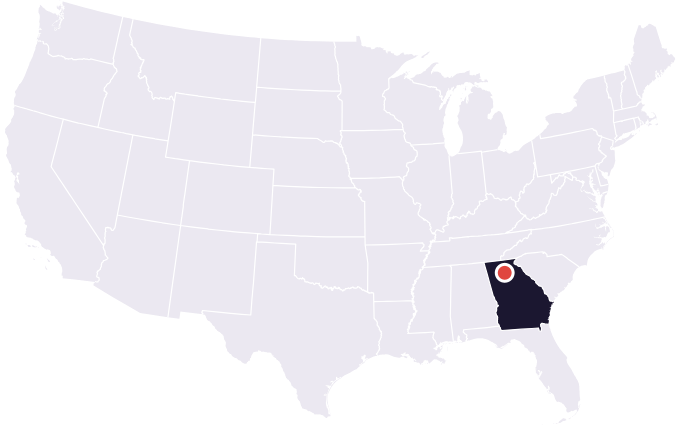
Red light: no path in residential zones, farm-zoned land only by permit
Outside Cumming city limits, Forsyth County zoning doesn't permit short-term rentals in any residential district, only in the A1 and Ag-Res agricultural districts with a conditional use permit.[1, 7] A permitted rental there also needs a $250 yearly county license, and the owner signs a notarized statement on it.[2, 4] Inside city limits, the city code has no short-term rental use, and its closest uses, lodging services and bed and breakfast inns, are not permitted in residential districts.[8, 9]
Our verdict, based on the sources at the end of this guide.
Forsyth County zoning covers Cumming addresses outside city limits, and it doesn't permit short-term rentals in any residential district.[1, 7] The county allows them only in the A1 and Ag-Res agricultural districts, after the Board of Commissioners grants a conditional use permit, and then with a $250 yearly license.[1, 2] The license needs the owner's notarized statement and a local contact, 21 or older, who can respond at the home within three hours of a county notice, at any hour.[2, 4] Inside city limits, the city code doesn't mention short-term rentals, and the closest uses it lists aren't permitted in residential districts.[8, 9] Taxes come to 15% outside city limits and 12% inside, plus Georgia's $5 a night fee.[13, 14, 15, 17]
Key requirements
Which rules apply to you
Forsyth County zoning applies to properties outside the City of Cumming boundary, and the county's GIS Viewer shows zoning districts by address.[7] The city's Planning and Zoning page has a GIS interactive map and a city boundary map, so you can check whether an address is inside city limits.[11]
County rules
Forsyth County's use tables mark short-term rentals as not permitted in every residential district, including Res1 through Res6 and R1 through R4.[1] They are a conditional use only in the A1 and Ag-Res agricultural districts, and only after a conditional use permit is granted.[1] The county's license page says short-term rentals are only permissible in A1 or Ag-Res zonings with an approved conditional use permit.[3]
County use permit
The Board of Commissioners decides each conditional use permit and weighs overnight and daytime guests, bedrooms, parking, lot size, distance to neighboring property lines and sewer or septic capacity.[1] It can attach conditions to an approval.[1] The county's planning fee schedule lists $400 for a conditional use permit submitted for board consideration.[6]
County license
No owner or local contact may rent the home without first getting a county short-term rental license, and each structure needs its own.[2] The fee is $250 a year, licenses expire on Dec 31, and a renewal filed after the second Monday in December must start over as a new application.[2] No license is issued for apartments, and a license can't be transferred, so a new owner must apply again.[2]
Who applies and what the landlord signs
The owner, or the owner's designated representative, applies every year, and the county form has a property owner statement the owner signs before a notary.[2, 4] A zoning application filed by someone other than the property owner needs a signed owner authorization.[1] The owner stays responsible for compliance, and a local contact's failure counts as the owner's.[2]
Application papers
The license application lists the address, every owner, the local contact, the bedrooms, the square footage and the maximum overnight guests, daytime guests and vehicles.[2, 4] It also needs a sworn statement that bedrooms and exits meet safety codes, and a new application needs a Health Department septic evaluation or a sewer capacity letter.[2] File it with the conditional use permit approval letter and the business license application.[4, 5]
County business license
The owner must also pay the county occupation tax under the business license rules.[2] The county's short-term rental business license form charges $125 for one person on a new application filed by June 30, and it counts all owners and the local contact as employees.[5]
Bed and breakfast
A bed and breakfast inn is a separate use in the county code, and it must be a private owner occupied residence with one to three guestrooms.[1]
City rules
Inside city limits, the zoning code doesn't list short-term rentals as a use, and the zoning administrator decides any use the table doesn't list, which can be found permitted, conditional or prohibited.[9] Lodging services, defined as temporary shelter open to the public for a fee, and bed and breakfast inns are not permitted in the R-1, R-1A, R-2 and R-3 residential districts.[8, 9] The code's dwelling unit definition excludes structures designed for transient residence.[8]
A city bed and breakfast inn needs its operators living on the premises, and a guesthouse can't be rented or used as a separate dwelling.[8] We found no city short-term rental permit or fee.[9, 11]
Operational and safety standards
Whose rules these are
These operating rules come from Forsyth County's short-term rental ordinance, which applies to rentals in the A1 and Ag-Res districts that have a short-term rental use permit.[2]
Local contact
Each owner names one local contact, 21 or older, with access and authority to manage the home, and the owner can be that person.[2] The local contact must respond at the home within three hours of a county notice, 24 hours a day, 7 days a week.[2] A new local contact costs $50 for a revised license, which must be posted in the home within ten days.[2]
Guests
Rent only to a responsible person, an occupant 21 or older, and get their written confirmation that they have read the rules, including the noise rules, and will follow them.[2] Keep that record for one year after each stay.[2] Your written agreement with the guest limits overnight guests to the number on your license application.[2]
Occupancy limits
On sewer, overnight guests can't exceed two per bedroom plus two, and on septic, two per bedroom, with 15 overnight guests at most either way.[2] Daytime guests can add up to four people, with no more than 19 in total, and overnight limits apply from 11 p.m. to 7 a.m.[2] Every bedroom needs an emergency escape window or door that opens to the outside.[2]
Parking
Vehicles are limited to one per bedroom or the capacity of the paved or hard-surface parking area, whichever is greater, and a towed boat or trailer counts as a vehicle.[2] Park only on gravel, concrete or asphalt, never in the yard, on the county right-of-way or along a road.[2]
Listings and posted notice
Every ad must show the county license number, the maximum occupancy, the maximum number of vehicles and the noise rules.[2] Post a notice by the front door with the owner's and local contact's names and a 24-hour phone number, the nearest hospital, guest and vehicle limits with a parking sketch, and quiet hours.[2] A copy of the license with its number goes in the notice too.[2]
Trash
The notice must tell guests that trash stays outside only in a curbside container, set out no sooner than 24 hours before the pickup day and removed within 24 hours after pickup.[2]
Safety
Every bedroom, adjoining hallway and common area needs a working smoke detector, and each habitable floor needs a carbon monoxide detector.[2] Each floor needs a charged fire extinguisher, and a private pool must meet the current International Swimming Pool and Spa Code.[2] Keep the house number visible from the street.[2]
Noise
The owner and local contact must use best efforts to keep guests within the county noise rules, and a guest's noise violation counts as a violation of the ordinance.[2]
Tax obligations
Sales tax
Georgia's October 2026 rate chart lists Forsyth County at 7%, and the state's 4% is included.[15] Anyone who rents a room or home to transients, including owners of private residences and their rental agents, counts as a retailer for sales tax.[16] The tax doesn't apply to accommodations supplied to one person for 90 continuous days or more.[16]
County hotel tax
Forsyth County charges 8% of the rent for every occupancy of a guestroom in unincorporated Forsyth County, effective Dec 1, 2024.[14] When a marketplace innkeeper, which the state describes as typically an online booking platform, facilitates the stay, the ordinance has it remit the tax.[14, 17] A continuous stay is taxed for its first ten days only, and tax collected is due by the 20th of the next month.[14]
City hotel tax
Inside city limits, the city charges 5% of the rent for every occupancy of a guestroom in a hotel.[13] The city's hotel definition includes lodginghouses, roominghouses and inns, and operators must register with the city clerk and display a certificate of authority.[12] A continuous stay is taxed for its first ten days only.[12]
State hotel-motel fee
Georgia charges a $5 per night state hotel-motel fee for each night a room is rented.[17] The marketplace innkeeper, usually an online booking platform, collects and remits it, and a host who lists through one doesn't collect it.[17] The fee stops on the 31st day of continuous occupancy.[17]
What it adds up to
Outside city limits, the 7% sales tax plus the 8% county hotel tax comes to 15%.[14, 15] Inside city limits, the 7% sales tax plus the 5% city hotel tax comes to 12%.[13, 15] The $5 a night state fee comes on top of either total.[17]
Enforcement
County fines
Within 12 months, a first violation of the county ordinance brings a fine of up to $250 and a written warning, and a second brings up to $500 and a 30 to 90 day license suspension.[2] A third brings up to $1,000 and revocation, and neither the owner nor the local contact can reapply for 12 months.[2] Cases go to Magistrate Court, and action can be brought against the owner, the local contact, the responsible person or the guests.[2]
Renting without a license
Each day a home is marketed or rented for overnight stays without the required license is a separate violation.[2] Operating without a valid license can also be prosecuted under the county's general penalty, a fine of up to $1,000, up to 60 days in jail, or both.[2, 18] Under the general penalty, each day a violation continues is a separate offense.[18]
Revocation and appeals
A suspension or revocation needs notice and a chance for a hearing before the Board of Commissioners, and false information on an application can mean immediate suspension or revocation.[2] Appealing a denial costs $250, and the board's decision is final unless appealed to Forsyth County Superior Court within 30 days.[2] The Sheriff's Office and Code Compliance enforce the ordinance.[2]
City enforcement
The city's building official and zoning administrator enforce the zoning code and can issue stop work orders, notices of violation and citations.[10] The city can assess up to $1,000 for each day a violation stays unremedied after a notice of violation, and violating the zoning code is a misdemeanor.[10] It can also revoke business registrations and ask utility providers to withhold service.[10]
You can appeal a zoning administrator's decision to the board of zoning appeals, which is the mayor and council, within five business days.[10]
Bottom line for arbitrage
Skip Cumming for nightly rental arbitrage unless the home is on A1 or Ag-Res land and your landlord will sign off on a county use permit. County residential zones bar short-term rentals, and we found no path in the city.
Step 1 is the hard part. We find landlords who already said yes →
Sources
Tell us your market. Our team calls landlords and sends you properties already approved for Airbnb.
- Landlord-approved listings
- New deals weekly
- Search any US market
More guides in this state
Browse all city guides →Rules tell you where. We find the landlord who says yes.
STR Exchange members get landlord-approved rentals, new deals every week and a team that searches their market.
- Landlord-approved listings
- New deals weekly
- Many markets