Gatlinburg
Can you run an Airbnb or do rental arbitrage here? What the city requires: permits, taxes, safety rules and enforcement.
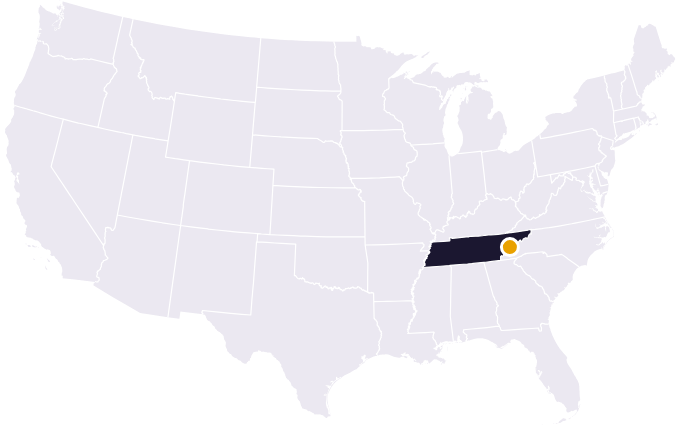
Yellow light: allowed with an annual permit, but not in every zone
Gatlinburg allows tourist residences with an annual permit in some residential and commercial zones, and excludes them from R-1A and R-2A.[1] The permit costs $200 for 2 bedrooms or fewer plus $75 for each bedroom over two.[2] Confirm the zoning for your address before you apply, as the city tells applicants to do.[2]
Our verdict, based on the sources at the end of this guide.
Gatlinburg requires an annual Tourist Residence Permit for rentals of overnight or weekly stays, and its zoning ordinance allows them in some zones but not in R-1A or R-2A.[1] The permit costs $200 for 2 bedrooms or fewer plus $75 for each extra bedroom.[2] Taxes run 12.75% by the city's own count, and the city bills hosts a separate 1.25% gross receipts tax.[5] Check the zoning for your address first, and plan on an inspection.[2]
Key requirements
Zoning check
R-1 allows single family dwellings to be used as tourist residences with an annual permit, and C-1 lists tourist residences as a use.[1] R-2 and R-3 carry R-1's uses, while R-1A and R-2A exclude tourist residences.[1] The city makes it the applicant's job to confirm with Building and Planning that the property is zoned for overnight rental before applying.[2]
Annual permit
Each tourist residence needs an annual Tourist Residence Permit.[1] You can't rent until a valid permit is on file.[4] The city takes applications at its Customer Service Center or by mail, and its page also lists an online option.[2]
Parking and site plan
In R-1 the permit needs at least 1.25 on-site parking spaces per bedroom.[1] In C-1 it needs at least two spaces, or one for a single bedroom unit.[1] Both zones also require administrative site plan review and a structure that meets city code for housing transient residents.[1]
Owner or agent
The code says the owner of the tourist residence or the owner's agent must get the permit.[3] If you manage a home you don't own for pay, Tennessee's Real Estate Commission says a vacation lodging service, which manages and rents residential units owned by others for stays of no more than 14 days, needs a firm license and a designated agent license.[6]
Business licenses
The city's overnight rental sheet lists a Gatlinburg business license with a $15 application fee and a Sevier County business license with a $15 application fee.[5] It also says you need a Tennessee Department of Revenue tax ID number for each location.[5]
Operational and safety standards
Annual inspection
The code says each tourist residence needs a permit and an annual tourist residency inspection.[3] The city says the permit fee pays for fire and building inspection.[2]
Sprinklers
Tourist residencies of more than three stories, more than 5,000 gross square feet, or more than twelve occupants must have an approved sprinkler system.[4] The application asks for the number of bedrooms and stories, the maximum occupants and the gross square feet.[4]
Occupancy limit
The zoning ordinance defines tourist residence occupancy as the maximum number of occupants allowed at one time in an approved, current and permitted tourist residence.[1] The application asks you to state that maximum.[4]
Signs
Signs at a tourist residence must follow the sign rules in Section 411 and be static, human-readable text and graphics, with no QR codes, bar codes or other scannable technology.[1] An existing sign that still has a prohibited scannable code after the compliance deadline violates the permit's operating standards.[1]
Leases and HOAs
Tennessee's Short-Term Rental Unit Act says a lessor may restrict short-term use of leased property through the lease.[7] It also lets a condo, co-op or homeowners association restrict short-term use through its governing documents.[7]
Tax obligations
Sales tax
Every short-term rental is subject to the 7% state sales tax and the local sales tax.[8] Sales tax returns and payments are due monthly by the 20th.[8]
Hotel and motel tax
The city's overnight rental sheet says the hotel/motel tax is 3% of gross sales, for a 12.75% total of 3% to the city and 9.75% to the State of TN.[5] It calls this an add-on tax to the guest, due by the 20th of each month.[5]
Gross receipts tax
The city also charges a gross receipts tax of 1.25% of total gross sales, excluding sales tax.[5] It comes from the business owner, isn't added to the guest's bill, and is due by the 20th of each month.[5]
Booking platforms
The city's sheet says online marketplaces collect and remit the sales and hotel/motel taxes, but won't remit the city gross receipts tax for you.[5] If you rent another way, you may be responsible for those taxes.[5]
State registration
Tennessee's manual says property owners, marketplace facilitators and property management companies with over $100 a month in taxable service sales must register with the Department of Revenue.[8] The city's Finance Department collects the hotel/motel and gross receipts taxes.[9]
Enforcement
Zoning penalty
Violating the zoning ordinance is a misdemeanor, with a fine of not less than $2 and not more than $50 for each offense.[1] Each day a violation continues counts as a separate offense.[1]
Renting without a permit
The municipal code, in the copy MTAS publishes through Mar 23, 2022, says an owner or an agent who rents a tourist residence without a permit is in violation.[3] Each rental is a separate violation, with a fine of up to $50 per violation.[3]
Court action
The zoning ordinance allows an injunction, mandamus or other action to prevent the use of a building in violation of it.[1]
Suspension or non-renewal
Failing to bring an existing sign with a prohibited scannable code into compliance violates the permit's operating standards and may result in suspension or non-renewal of the permit.[1]
State law
Tennessee's Short-Term Rental Unit Act says a city may authorize short-term rentals through a permit or application process.[7] It protects an owner's existing short-term use from later local rules until the property is sold or transferred, goes 30 continuous months without use, or has three violations of a generally applicable local law.[7]
Bottom line for arbitrage
Workable in the right zone, so confirm the address's zoning in writing before you sign.
Step 1 is the hard part. We find landlords who already said yes →
Sources
Tell us your market. Our team calls landlords and sends you properties already approved for Airbnb.
- Landlord-approved listings
- New deals weekly
- Search any US market
More guides in this state
Browse all city guides →Rules tell you where. We find the landlord who says yes.
STR Exchange members get landlord-approved rentals, new deals every week and a team that searches their market.
- Landlord-approved listings
- New deals weekly
- Many markets