Jacksonville
Can you run an Airbnb or do rental arbitrage here? What the city requires: permits, taxes, safety rules and enforcement.
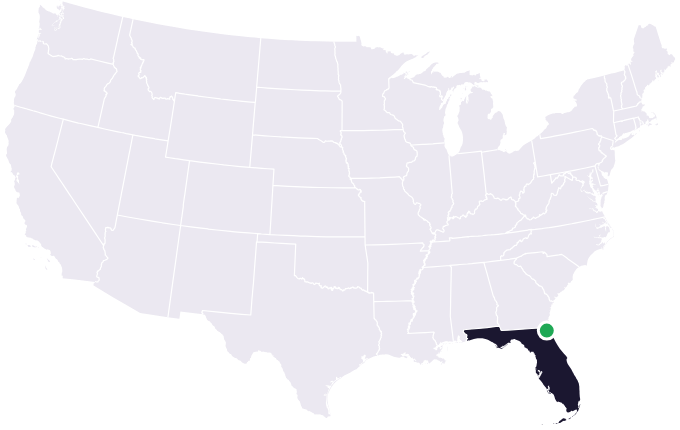
Green light: no city permit, but a state license and county tax apply
Florida law bars a local rule that prohibits vacation rentals or regulates how long or how often you rent them, except for rules adopted on or before June 1, 2011.[1] As of Oct 2, 2026, we found no city short-term rental permit or rule written for short-term rentals in the Ordinance Code.[2] You still need a state DBPR license[3] and must register for Duval's 6% tourist tax.[4]
Our verdict, based on the sources at the end of this guide.
As of Oct 2, 2026, we found no city short-term rental rules in the Ordinance Code, and Florida law bars local rules that ban vacation rentals or limit how long or how often you rent, except for rules adopted by June 1, 2011.[1, 2] Your paperwork is state and county: a DBPR vacation rental license,[3] a Duval tourist tax registration[4] and Florida sales tax.[6] Taxes on a booking total 13.5%.[4, 5] Jacksonville Beach, Atlantic Beach, Neptune Beach and Baldwin add their own business tax.[7]
Key requirements
State preemption
A local law may not prohibit vacation rentals or regulate the duration or frequency of rental of vacation rentals.[1] That doesn't apply to local laws adopted on or before June 1, 2011.[1]
State DBPR license
Get a vacation rental license from Florida's DBPR if you rent a whole unit more than three times a calendar year for periods under 30 days or one calendar month, whichever is less, or if you advertise it as regularly rented.[3] A single-unit license costs $170 for a full year, plus a $50 application fee for new applications and a $10 education fee, and Duval County licenses renew on June 1.[3]
Operating under a lease
A single license is for a unit owned and operated by the same person or entity.[3] DBPR describes a licensed agent as someone the owner has authorized to rent the unit out, and says that authority can be a rental agreement or contract.[3] A collective license for an agent covers houses or units at separate locations, up to 75 units, in counties within one district.[3]
City rules
We found no Jacksonville permit, registration or zoning category written for short-term rentals in the Ordinance Code.[2] The Property Appraiser still tells operators to follow local land use, zoning, parking and noise rules.[8]
Beach cities
Jacksonville Beach has its own Short-Term Vacation Rental Registration Certificate at $150 per property, renewed by October 1, and it requires a Fire Marshal inspection.[9]
Operational and safety standards
Fire safety
The Property Appraiser lists a required fire inspection among a rental owner's duties.[8] DBPR says to install smoke detectors in every living unit and keep the electrical system safe, and it reports fire items it sees to the State Fire Marshal and local fire authorities.[3]
Cleaning and sanitation
Keep the unit clean, safe and free of vermin, and change sheets and pillowcases between guests or once a week, whichever comes first.[3] Sanitize dishes and glassware between guests, or post the state's notice that you can't.[3]
Buildings of three stories or more
Unless balconies and stairs are common elements, file a Certificate of Balcony Inspection with DBPR every three years.[3] Condo vacation rentals in some taller buildings need automatic fire sprinklers.[3]
Posting
Display your license in a conspicuous place on the premises.[3] The Property Appraiser also lists a human trafficking awareness sign among the required postings.[8]
State access
Vacation rentals aren't on DBPR's regular inspection schedule, but you must make the unit available to the division on request.[1]
Tax obligations
Duval tourist tax
Duval County charges a 6% Convention/Tourist Development Tax on short-term rentals: 4% tourist development tax and 2% convention development tax.[4] It applies to rentals of six months or less, and the city code names vacation rental property such as Airbnb or Vrbo among the taxed rentals.[4, 10]
Register and file monthly
To register, email touristtax@coj.net or call (904) 255-5700.[4] File a return every month even if you collected no tax. It's due the 1st of the next month and delinquent after the 20th.[4]
State sales tax
Florida charges 6% state sales tax plus any discretionary surtax on rentals of six months or less, and anyone who rents transient accommodations must register with the Department of Revenue.[6] The Department lists Duval at 13.5% for living and sleeping accommodations and 7.5% for other taxable transactions.[5]
Booking platforms
Duval says it has no agreement with any online rental platform to receive tax for a taxpayer, so the 6% remains your job to collect and remit.[4] The Property Appraiser adds that using Airbnb, Booking.com or Vrbo doesn't necessarily mean all required taxes are paid for you.[8]
Business tax
The Tax Collector's business tax page tells short-term transient rental providers to see its tourist tax page.[7] It also says businesses in Jacksonville Beach, Atlantic Beach, Neptune Beach or Baldwin need that city's own business tax.[7]
Enforcement
Late tourist tax
Unpaid Duval tourist tax draws a 10% penalty per month, capped at 50%, with a $50 minimum, plus daily interest.[4]
No state license
It is a second-degree misdemeanor to open a public lodging establishment without a license or while its license is suspended or revoked.[11]
State fines and suspension
The state can fine up to $1,000 per offense and can suspend a license for up to 12 months.[11]
Local requirements
The Property Appraiser warns that failing to follow tax, registration, inspection and local requirements can be costly.[8]
Bottom line for arbitrage
Easy to start here: no city permit, so your costs are the state license and 13.5% in taxes. Get the lease and any HOA rules right first.
Step 1 is the hard part. We find landlords who already said yes →
Sources
Tell us your market. Our team calls landlords and sends you properties already approved for Airbnb.
- Landlord-approved listings
- New deals weekly
- Search any US market
More guides in this state
Browse all city guides →Rules tell you where. We find the landlord who says yes.
STR Exchange members get landlord-approved rentals, new deals every week and a team that searches their market.
- Landlord-approved listings
- New deals weekly
- Many markets