Johns Creek
Can you run an Airbnb or do rental arbitrage here? What the city requires: permits, taxes, safety rules and enforcement.
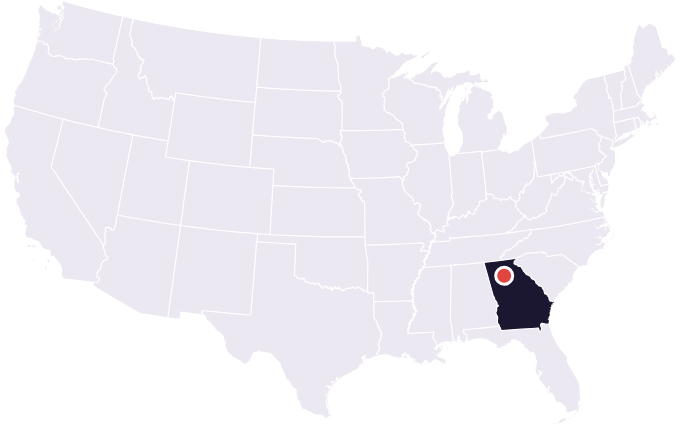
Red light: the zoning code has no path for stays under 30 days
Johns Creek's zoning code doesn't name short-term rentals, but it defines a dwelling as a residential use for more than 30 consecutive days.[1] Its single-family districts bar any use not listed as permitted,[2] and the one home lodging use we found, a bed and breakfast, must be owner occupied.[3] We found no permit or fee for short-term rentals,[1] so we read this as a ban on rentals under 30 days.
Our verdict, based on the sources at the end of this guide.
Johns Creek's zoning code doesn't name short-term rentals, and we found no permit, fee or cap for them.[1] It defines a dwelling as a residential use for more than 30 consecutive days,[1] and its single-family districts bar any use not listed as permitted.[2] The one home lodging use we found, a bed and breakfast, needs a use permit, a listed district and an owner who lives there.[3] Zoning violations are misdemeanors, and each day counts as a separate offense.[6]
Key requirements
Dwelling definition
The zoning code defines a dwelling as any building or part of one designed for or used for residential purposes for periods of more than 30 consecutive days.[1] We found no mention of short-term or vacation rentals in the city code, so we read a stay under 30 days as outside that definition.[1]
Single-family districts
In the nine single-family districts, R-1 through R-5A, any use not specifically designated as permitted is prohibited.[2] From R-2A on, the code also allows uses granted by an administrative permit or use permit.[2] The R-1 permitted uses start with the single-family dwelling, and we found no lodging or rental use in Article VI.[2]
Bed and breakfast
A bed and breakfast inn is a residence where guest rooms are available for fewer than 30 consecutive days and breakfast is the only meal served.[1] It needs a use permit, and the use permit standards name the AG-1, R-6 and TR districts, while the definition names only AG-1 and TR.[1, 3] The bed and breakfast must be owner occupied.[3]
Longer stays
Stays of more than 30 consecutive days fit the dwelling definition.[1] A rooming house, which rents lodging to non-household members for 30 days or longer without meals, is a separate residential use.[1] The code defines a family as related people or up to four unrelated people living as a single housekeeping unit.[1]
Who decides
The Director of the Community Development Department interprets the zoning ordinance and enforces it, and appeals follow the Article XXII procedures.[7]
Operational and safety standards
Owner on site
A bed and breakfast must be owner occupied.[3] A country inn also needs the owner or innkeepers to live on the premises.[1]
Guest rooms and meals
A bed and breakfast may have a minimum of 2 and a maximum of 5 guest rooms.[3] Breakfast is the only meal served and is included in the room charge, while a country inn serves lunch or dinner as well.[1]
Parking and access
No parking is allowed in the minimum front yard, and curb cut access can't be from a local street.[3] Parking requirements are the same as for a hotel or motel under Article 18.[3]
Signs and buffers
Identification or advertising signs are limited to 4 square feet in surface area and 4 feet in height.[3] Landscape and buffer areas follow Section 4.23 for the AG-1 Agricultural District.[3]
Hotel and motel
The code defines a hotel or motel as a building where lodging and customary services, such as meeting rooms, a restaurant, housekeeping or a fitness center, are offered to the public for compensation to guests staying an average of less than 30 days.[1]
Tax obligations
City hotel tax
Johns Creek charges a 7% excise tax on the rent for every occupancy of a guestroom in a hotel in the city.[4] The code's definition of hotel includes rooming houses, lodging houses, inns, motels and cabins whose guestrooms are regularly furnished for value to the public.[4] Operators collect it, and it is due by the 20th day of the month after the occupancy.[4]
Sales tax
Georgia's October 2026 rate chart lists Fulton County outside Atlanta, Hapeville, College Park and East Point at 7.75%, and the state's 4% is included.[5] The city's charter says its incorporated area is a portion of Fulton County.[8] Anyone who rents a room or home to transients, including owners of private residences and their rental agents, counts as a retailer for sales tax.[9]
State hotel-motel fee
Georgia charges a $5 per night state hotel-motel fee for each night a room is rented.[10] The marketplace innkeeper, usually an online booking platform, collects and remits it, and a host who lists through one doesn't collect it.[10] The fee stops on the 31st day of continuous occupancy.[10]
Sales tax on long stays
Sales tax doesn't apply to accommodations supplied to one person for 90 continuous days or more.[9]
Enforcement
Zoning violations
Violating the zoning ordinance is a misdemeanor, and each day's continuance is a separate offense.[6] The owner and any tenants of a property where a violation exists are each guilty of a separate offense.[6] On conviction, the penalty is a fine of $1,000.00 or imprisonment for not more than 60 days, or both.[6]
Lien on the property
The Director of Community Development can have a violation corrected at public expense, and the cost becomes a lien on the property.[6]
General city penalty
For violations of the city code in general, a conviction brings a fine of up to $1,000.00, imprisonment for up to six months or both, unless another section says otherwise.[11] For continuing violations, each day counts as a separate offense.[11]
Who enforces
The Director of the Community Development Department must enforce the zoning ordinance, and every city officer and employee must report suspected violations.[7]
Bottom line for arbitrage
Skip Johns Creek for nightly rental arbitrage. The code has no permit for it, and the one lodging use for a home needs the owner living there.
Step 1 is the hard part. We find landlords who already said yes →
Sources
Tell us your market. Our team calls landlords and sends you properties already approved for Airbnb.
- Landlord-approved listings
- New deals weekly
- Search any US market
More guides in this state
Browse all city guides →Rules tell you where. We find the landlord who says yes.
STR Exchange members get landlord-approved rentals, new deals every week and a team that searches their market.
- Landlord-approved listings
- New deals weekly
- Many markets