Osceola County
Can you run an Airbnb or do rental arbitrage here? What the city requires: permits, taxes, safety rules and enforcement.
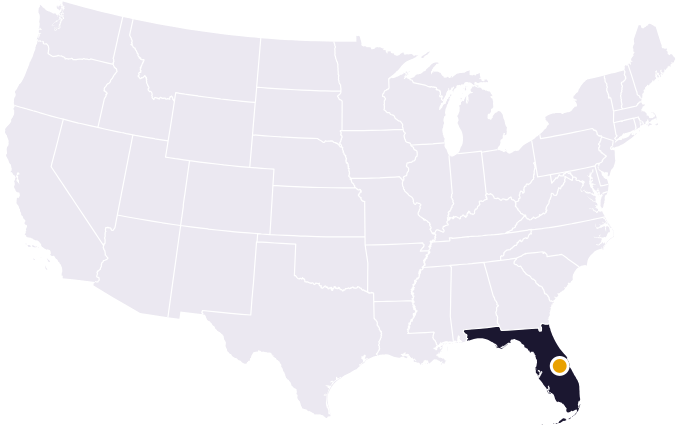
Yellow light: only in planned developments inside the rental overlay
This guide covers homes in unincorporated Osceola County, outside the city limits of Kissimmee and St. Cloud; a Kissimmee or Davenport mailing address does not mean the home is in the City of Kissimmee, and those two cities have their own rules.[1] The county's Land Development Code says short term rental is permitted in the Planned Development zoning district, and the development must fall within the county's Short Term Rental Overlay.[1] The county's use table for its standard zoning districts has no short term rental row.[1]
Our verdict, based on the sources at the end of this guide.
Osceola County's Land Development Code permits short term rental in the Planned Development zoning district, inside the area the county maps as the Short Term Rental Overlay.[1] The code sets up a Short Term Rental Planned Development (STRPD) district for developing short term rental housing in that area.[1] Table 3.4, the use table for the county's standard zoning districts, has no short term rental row, and the code says a blank cell means a use is not permitted.[1] We found no county short term rental permit in Chapter 3 of the code, and the state requires its own vacation rental license.[1, 5] Taxes add up to 13.5%: 6% state, a 1.5% county surtax and a 6% county tourist development tax.[7, 8, 9]
Key requirements
Outside city limits only
This guide covers the unincorporated parts of Osceola County, such as the Four Corners and west US 192 resort areas, Celebration, Poinciana and Reunion. A Kissimmee or Davenport mailing address does not mean the home is inside the City of Kissimmee. Kissimmee and St. Cloud have their own rules, and this guide does not cover them.
Where short term rental is allowed
The code says short term rental is permitted in the Planned Development zoning district, subject to the standards for a Planned Development.[1] It adds that the proposed developments must fall within the boundaries of the Short Term Rental Overlay.[1] The same two sentences appear in Sec. 3.6.1(K) and in Sec. 3.12.2, Short-Term Rental Overlay.[1]
Sec. 3.6.1(K) points to Exhibit 3.6 for the overlay boundary, and Sec. 3.12.2 points to Exhibit 3.12.2.[1] A note to the code's zoning table places the Short Term Rental Overlay boundary on Future Land Use Map 2A.[1] The code text does not print the map, so ask the county whether a given home is inside the overlay.
The STRPD district
Among its planned development types, the code lists the Short Term Rental Planned Development (STRPD).[1] It says the district is established for the purpose of developing short term rental housing in the geographic area the code describes.[1] It calls short term rental housing a unique land use with characteristics common to both commercial and residential land uses.[1]
A planned development is a zoning approval for a whole development, not a permit for one home.[1] The applicant for a planned development must be the owner or owners, or an agent authorized to represent all land within it.[1] So eligibility comes with the home's zoning, and a tenant does not apply for it.[1]
Commercial Tourist district
The code says the Commercial Tourist (CT) district implements the Tourist Commercial and Short Term Rental Overlay policies of the county's plan.[1] It describes CT as primarily intended for intense tourist-related housing, commercial, recreational and entertainment uses.[1] In the Commercial land use category, the zoning table limits CT to the Short Term Rental Overlay boundary.[1]
Standard residential districts
Table 3.4, the code's use table for its standard districts, has no row for short term rental.[1] The code says a blank cell in the use table means a use is not permitted in that district.[1] It also says a use not specifically listed, but similar to a listed use, may be allowed upon approval by the County Manager.[1]
The code says land may not be used or occupied except in conformity with its regulations for the district in which it is located.[10] We found no sentence in Chapter 3 that permits short term rental in the low, medium or high density residential districts.[1] If a home is in one of those districts, and not in a planned development inside the overlay, ask the county zoning office in writing before you sign.
Accessory living units
An accessory living unit may be rented out only if the primary structure has a homestead exemption, and then only for long-term periods.[1] The code says these units are not intended for short-term rentals.[1]
County permit
We searched Chapter 3 of the Land Development Code for short term rental, vacation and transient, and found no county short term rental permit or registration there.[1] Ask the county whether a local business tax receipt applies; that rule is not in the pages we read.
If you rent from a landlord
The county's zoning rule turns on the home's zoning district and the overlay, not on who owns the home or who lives in it.[1] Chapter 3 has no owner-occupancy rule for short term rental and no rule that bars a tenant from hosting.[1] State law defines the operator of a lodging establishment as the owner, licensee, proprietor, lessee, manager, assistant manager or appointed agent.[4]
Your lease still has to allow hosting. Ask whether the community has an owners association with its own rental rules; the county code does not cover those.
State license
Florida requires each public lodging establishment to obtain a state license, and operating without one is a misdemeanor.[5] State law defines a vacation rental as a condominium or cooperative unit, or a single-family to four-family house or dwelling unit, that is also a transient public lodging establishment.[3] The state's guide lists a $50 application fee, a $10 Hospitality Education Program fee and a $170 full-year license fee for a single rental unit.[6]
Who holds the state license
A license can't be transferred from one place or individual to another.[5] The state's guide says a collective license is issued to a licensed agent who represents a group of houses or units at separate locations.[6]
State law on local rules
Florida law says a local law may not prohibit vacation rentals or regulate the duration or frequency of their rental, except for a local law adopted on or before June 1, 2011.[2] The history line under Sec. 3.12.2 cites Ord. No. 2025-10, dated Mar 17, 2025, and we did not read when the overlay rule was first adopted.[1] We report the county rule as the code states it.[1]
Operational and safety standards
What the county code sets for hosts
The short term rental text in Chapter 3 is about where the use may go.[1] It sets no guest occupancy limit, parking count, trash rule or posting rule for an individual short term rental.[1] The standards it points to are the Planned Development standards, which apply to the development as a whole.[1]
Planned development standards
The code says the STRPD exists to allow design features that reflect the specific needs and impacts of short term rental housing.[1] Planned developments must provide buffers on their borders, and the buffer rule may be waived or modified where adjoining land uses are of a similar type or intensity.[1] Ask the county or the community for the conditions approved for that planned development.
Managing from home
The code's list of home occupations includes a short-term rental property management office.[1]
State rules for the unit
State law reserves the regulation of public lodging establishments, including sanitation standards and inspections, to the state.[2] Local governments keep the authority to inspect for compliance with the Florida Building Code and the Florida Fire Prevention Code.[2]
Tax obligations
State sales tax
Florida levies a 6% tax on the total rent charged for living quarters or sleeping or housekeeping accommodations.[7] A bona fide written agreement for continuous residence for longer than six months is not taxed.[7] The lessor or person receiving the rent charges the tax to the person paying the rent.[7]
County surtax
Osceola County's discretionary sales surtax totals 1.5% in 2026.[8] The state's form shows it in two parts, 1% and 0.5%.[8]
County tourist development tax
The state's rate table lists a 6% local option transient rental tax for Osceola County, collected by the county.[9] The local tax applies to rentals of living, sleeping or housekeeping accommodations for a term of six months or less.[9] It is in addition to the 6% state sales tax and any discretionary sales surtax.[9]
Who collects
In Osceola County the local tax is reported and remitted directly to the county, while sales tax and the surtax on transient rentals are always reported and remitted to the Florida Department of Revenue.[9] The state's form says to contact the county to verify the rate, because not all counties notify the Department of changes.[9] Ask the county how a host registers for the tourist development tax and whether a booking platform remits it for you.
Enforcement
County zoning enforcement
A failure to comply with a limit the Land Development Code puts on the use of land is a violation of the code.[10] The code is enforced by the Osceola County Code Enforcement Board, by the Board of County Commissioners through its authority to enjoin and restrain violators, or by prosecution in the name of the State of Florida.[10] Each calendar day a violation continues after receipt of a written notice counts as a separate violation and a separate offense.[10]
Fines
A person who violates the code may be prosecuted in the same manner as a misdemeanor.[10] On conviction the punishment is a fine of up to $500, up to 60 days in the county jail, or both.[10] The short term rental text in Chapter 3 states no fine of its own.[1]
Stop orders
The County Manager may issue a cease and desist order by written notice sent by regular mail to the owner of the property or the person responsible for the violation.[10] The code lists two conditions for stopping an activity: an emergency with a serious effect on public health, safety or welfare or the environment, and irreversible or irreparable harm.[10]
State license
Operating a public lodging establishment without a state license is a second degree misdemeanor.[5] State law tells local law enforcement to give immediate assistance in pursuing an illegally operating establishment.[5]
Bottom line for arbitrage
For a renter who hosts, this county works when the home sits in a planned development approved for short term rental inside the county's Short Term Rental Overlay. Outside that, the county's use table has no short term rental row for standard residential districts, so confirm the zoning in writing before you sign.
Step 1 is the hard part. We find landlords who already said yes →
Sources
Tell us your market. Our team calls landlords and sends you properties already approved for Airbnb.
- Landlord-approved listings
- New deals weekly
- Search any US market
More guides in this state
Browse all city guides →Rules tell you where. We find the landlord who says yes.
STR Exchange members get landlord-approved rentals, new deals every week and a team that searches their market.
- Landlord-approved listings
- New deals weekly
- Many markets