Seattle
Can you run an Airbnb or do rental arbitrage here? What the city requires: permits, taxes, safety rules and enforcement.
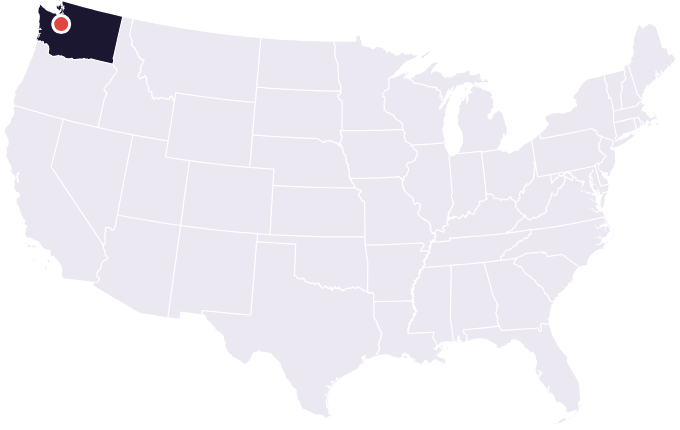
Red light: only owners can hold the license, not tenants
Seattle's operator license goes to the owner of the unit, and renters can't get one apart from a few rentals that were already operating before September 30, 2017.[1, 2] An operator can license one unit, or two if one is a primary residence.[2] Running without a license can mean a $500 penalty for a first violation.[1, 2]
Our verdict, based on the sources at the end of this guide.
Seattle licenses short-term rentals, and the license goes to the owner of the unit.[1, 2] Renters can't get one, apart from a few rentals already operating before September 30, 2017.[1, 2] An operator can license one unit, or two if one is a primary residence.[2] A unit that isn't the owner's primary residence must also register for rental inspection.[1, 4] Washington lists a 15.70% total lodging tax for Seattle short-term rentals.[3]
Key requirements
Owner license
Only the owner of the unit can be the operator, and renters can't get an operator license unless they live in the Downtown Urban Center and their unit has operated as a short-term rental since before September 30, 2017.[1] The code limits that renter exception to the Downtown Urban Center, south of Olive Way and north of Cherry Street, and the renter must certify the owner authorized it.[2] A property manager can list and manage the unit, but the license must be in the owner's name, and the owner carries the license duties, the tax duty and any penalties.[1, 2]
If you manage for the owner
Washington's real estate license law defines performing property management services for others, including marketing, leasing and renting, as real estate brokerage services.[5] It exempts only some limited tasks for a person retained by the owner, such as showing a unit, receiving rent and leases, and administrative or maintenance work.[6] Ask the Washington Department of Licensing whether your role needs a real estate license before you take on a unit.[5, 6]
Two licenses
You need a Seattle business license tax certificate and a short-term rental operator license.[1] Get the business license first, allow 48 hours, then apply for the operator license in the Seattle Services Portal.[1]
Unit cap
An operator can offer one dwelling unit, or two if one of them is the operator's primary residence, with exceptions for rentals operating before September 30, 2017.[2] An operator can be a person, a married couple, a group or an LLC.[1] One operator may hold only one operator license, and an LLC principal or that principal's spouse can be on only one.[2]
Rental registration
A short-term rental that isn't owner occupied must register under the Rental Registration and Inspection Ordinance, and the city asks you to register before you apply for the operator license.[1, 4] Registration is $126 for a property, which includes the first rental unit, plus $31.50 for each additional unit.[4]
Where it's barred
The land use code bars short-term rental in spaces that aren't dwelling units, such as RVs, tents, garages and boats, and in live-work units and houseboats.[1] It also limits short-term rental in some zones and shoreline areas, so ask the Seattle Department of Construction and Inspections about the address.[1]
Operational and safety standards
Listing number
Post the license number on every listing, including platform listings, in the format STR-OPLI-##-######.[1] Platforms may remove listings with a wrongly formatted number.[1]
Local contact and posted notice
Give guests a local contact who lives in King County and can respond during the stay.[2] Post emergency contacts, the address, a floor plan with fire exits, how to reach the city's Customer Service Bureau, maximum occupancy and the operator's or local contact's information inside the unit.[2]
Safety equipment
Every unit needs working smoke detectors and carbon monoxide alarms in every bedroom and on all habitable floors, plus a properly maintained and charged fire extinguisher.[2] The unit must also meet the city's housing and building maintenance code.[2]
Insurance
Carry liability insurance of at least $1,000,000 in the aggregate, or run every booking through a platform that provides equal or greater coverage.[2]
Renewal
A license is valid for 12 months from the date it's issued and renews through the Seattle Services Portal.[1] The city won't renew a license while penalties or past license fees are unpaid.[2]
Tax obligations
Lodging tax rate
Washington's rate sheet for October 1 to December 31, 2026 lists a total lodging tax rate of 15.70% for Seattle short-term rentals.[3] Its columns also show a 7% convention center tax and no special hotel-motel tax or tourism promotion fee for Seattle.[3]
State rules
Washington treats a rental of less than 30 days in a row as transient lodging.[7] Operators handle retail sales tax and business and occupation tax on gross lodging income, special hotel/motel tax where it applies, and the King County convention and trade center tax on stays under 30 days.[7]
City tax
The city's page sends you to the state for tax rules.[1] It says the City Council repealed Ordinance 125442, which would have imposed a separate Seattle tax on short-term rentals, in June 2018 after the state passed HB 2015.[1]
Booking platforms
The state says Airbnb collects and sends state and local retail sales tax, special hotel/motel taxes and convention and trade center taxes for its hosts.[7] You may still have to register with the department or report your rental income on an excise tax return.[7] The city says you must remit all applicable taxes unless the platform does it for you.[2]
Pending state bills
SB 5576 started as a 6% state tax on platform-booked short-term rentals, and HB 2559 would have let local governments tax them up to 4%.[8, 9] Neither became law: the legislature's pages show SB 5576 sent back to Senate Ways and Means in January 2026 and HB 2559 left in House Appropriations.[10, 11]
Enforcement
No operator license
Operating without a short-term rental license can mean a $500 penalty for a first violation and $1,000 for second and later violations within five years.[2] Each day can count as a separate violation.[2]
No business license
Operating a business in Seattle without a business license tax certificate can bring a $513 citation.[1]
Revocation and criminal charges
The city can deny, revoke or refuse to renew an operator license for violating the chapter.[2] A person with two or more citations or notices of violation in the past three years can face a misdemeanor charge.[2]
Rental registration penalties
Not registering a rental under the inspection ordinance can cost $150 a day for the first 10 days and $500 a day after that.[4]
Complaints
Anyone can report a short-term rental by submitting a Business Related Complaint through the city's Request a City Service page.[1]
Bottom line for arbitrage
Skip Seattle for rental arbitrage. Only owners can hold the license, so the only way in is a management deal where your landlord is the operator.
Step 1 is the hard part. We find landlords who already said yes →
Sources
Tell us your market. Our team calls landlords and sends you properties already approved for Airbnb.
- Landlord-approved listings
- New deals weekly
- Search any US market
More guides in this state
Browse all city guides →Rules tell you where. We find the landlord who says yes.
STR Exchange members get landlord-approved rentals, new deals every week and a team that searches their market.
- Landlord-approved listings
- New deals weekly
- Many markets